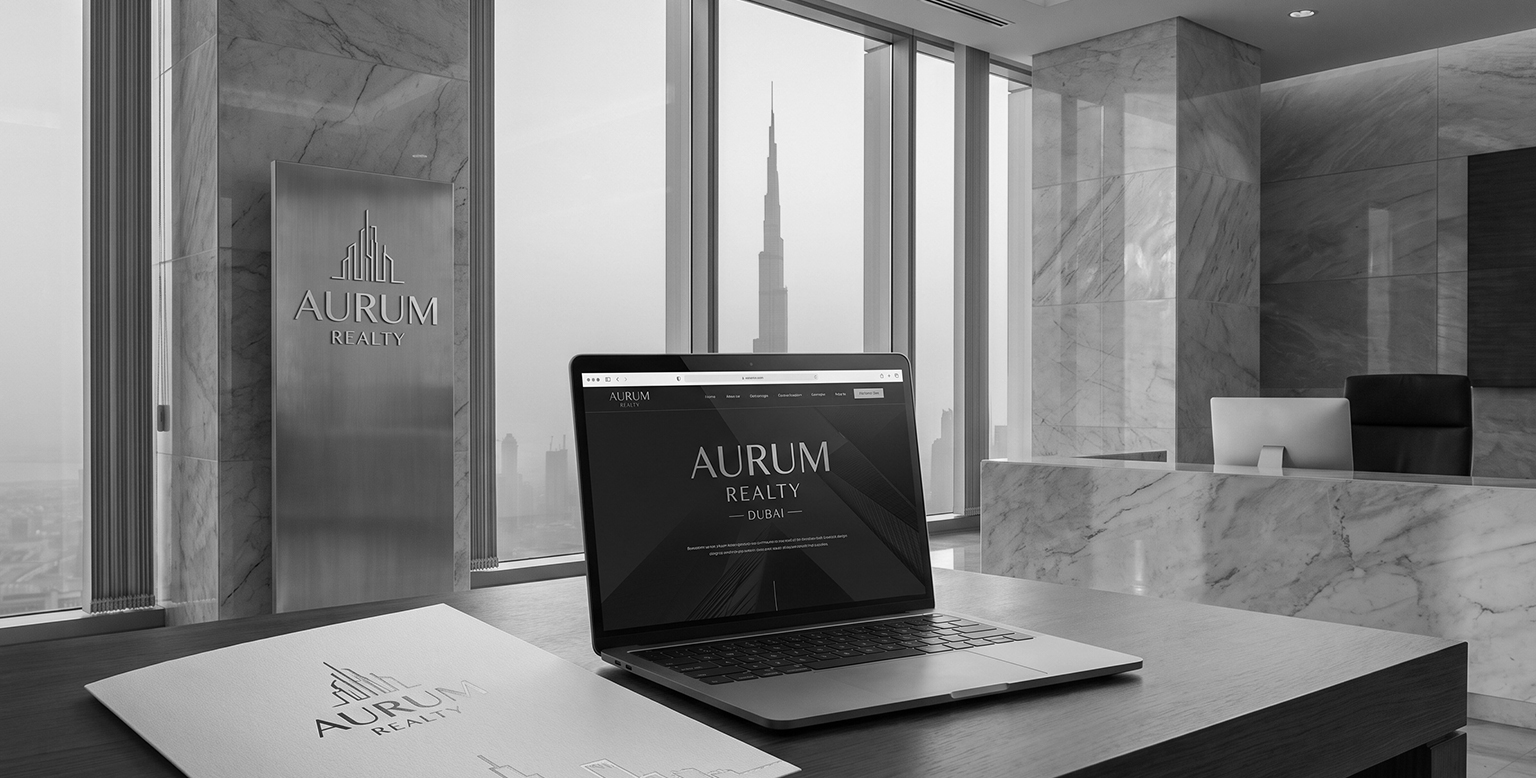






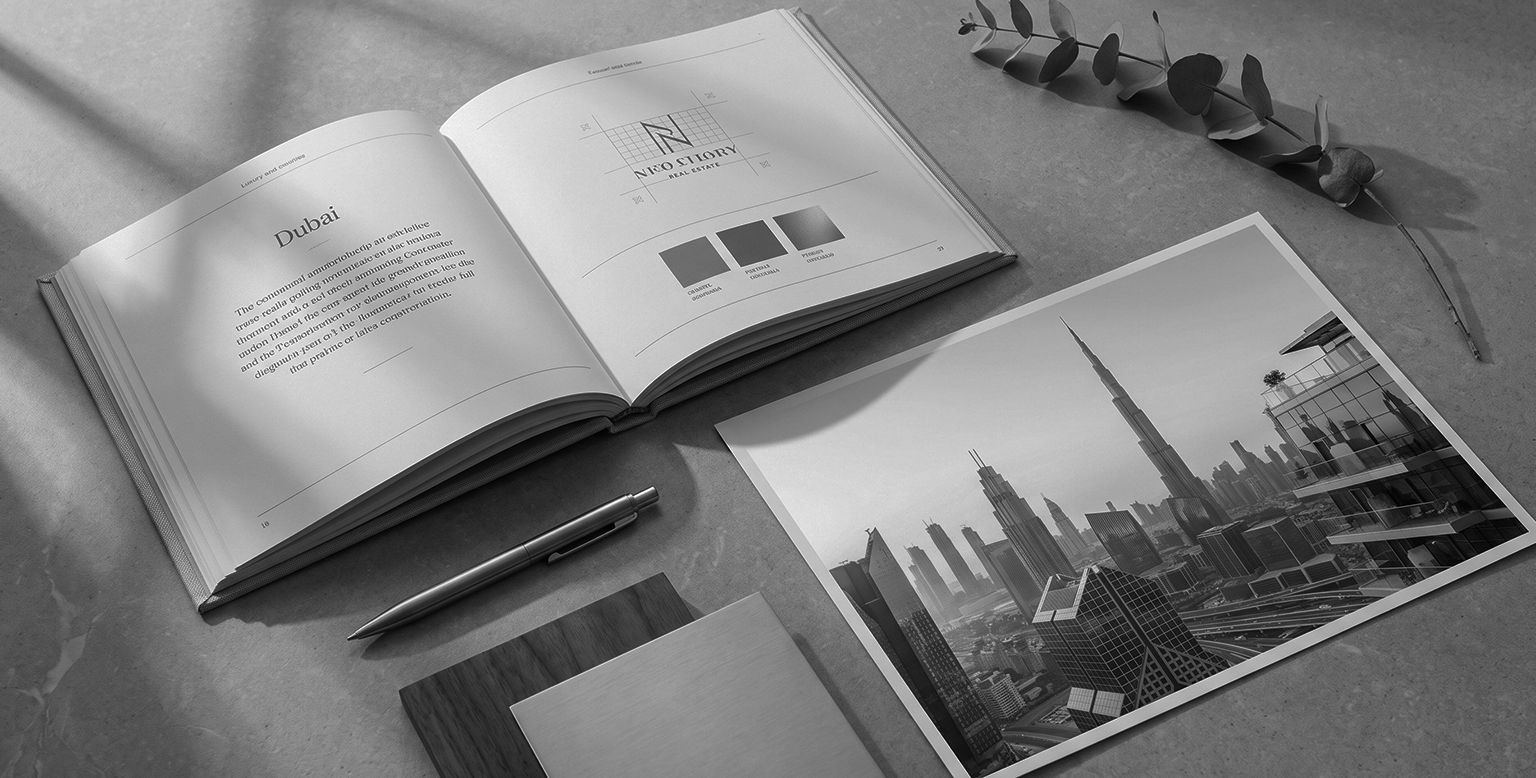
A strong set of real estate brand guidelines is what keeps your brand looking and sounding the same wherever people discover it. Whether someone sees your latest Instagram post, a billboard on Sheikh Zayed Road, a Bayut listing, or your website, they should instantly know it’s you. That’s exactly what a brand style guide does. It turns scattered marketing into one consistent brand experience.
This matters even more in Dubai. A single project often involves developers, brokerages, marketing agencies, photographers, CGI studios, and dozens of agents. Without clear guidelines, the brand starts to drift. Colours change, messaging becomes inconsistent, and premium developments lose the polished image they’re meant to project. From branded residences and off-plan launches to Golden Visa-focused campaigns, consistency is what builds trust.
This guide is for developers, brokerages, and independent agents who want a brand that feels premium wherever it appears. We’ll walk through what a brand style guide actually is, why it matters, and how to build one yourself step by step.
What Is a Real Estate Brand Style Guide?
A real estate brand style guide, sometimes called a real estate brand book, is the document that defines how a property brand looks, sounds, and shows up across every platform. It sets the rules for your visual identity, messaging and brand application so everything feels like it comes from the same company.
Think of it this way. Your brand strategy explains who you are, who you serve, and what you stand for. Your brand guidelines explain how that strategy should look and sound every single day. It’s where residential branding moves from ideas into something every designer, marketer, and sales team can actually follow.
A good guide usually covers:
- Logo system — where and how your logo should be used.
- Colours — approved brand colours across print and digital.
- Typography — fonts and hierarchy.
- Photography & visuals — image style, CGI, and creative direction.
- Brand voice — how your business communicates.
- Applications — how everything comes together across websites, social media, brochures, listings, and advertising.
The goal is not to restrict creativity. It is to make sure every customer gets the same experience, no matter where they interact with your brand.
Why Do Real Estate Brands Need Style Guidelines?
Simply put, consistency builds trust.
When buyers keep seeing the same visual identity, messaging, and quality across every touchpoint, they naturally begin to see the business as more established and credible. That’s especially important in Dubai’s premium property market, where buyers often spend weeks researching before ever speaking to an agent.
A good style guide also makes life much easier.
It keeps large teams aligned.
Property marketing rarely happens in-house anymore. Developers work with agencies, brokerages, photographers, videographers, CGI teams, and external designers. Clear guidelines ensure everyone produces marketing that feels like one brand instead of ten different ones.
It speeds up launches.
Instead of redesigning every brochure or social media post from scratch, teams work from approved templates. That means off-plan campaigns can move much faster without sacrificing quality.
It supports compliance.
Dubai advertising comes with strict RERA, DLD, and Trakheesi requirements . A style guide can include approved disclaimer formats, permit-number placement and advertising rules, making compliance part of the creative process instead of an afterthought.
Most importantly, a clear real estate branding strategy becomes much easier to execute when everyone follows the same playbook. That’s why successful developers treat real estate branding as an ongoing business asset rather than a design exercise.
What Should a Real Estate Brand Style Guide Include?
Building a style guide doesn’t have to be overwhelming. Think of it as documenting the decisions that make your brand instantly recognisable.
Step 1: Build Your Brand Foundation
Everything starts here.
Before choosing fonts or colours, define what your brand actually stands for. This becomes the foundation every future design decision should support.
Include:
- Mission and vision
- Brand promise
- Unique value proposition
- Target audience (end users, investors, Golden Visa buyers, luxury homeowners)
- Brand personality (confident, discreet, sophisticated, approachable)
This strategic layer is what separates thoughtful residential branding from marketing that simply looks nice.
Step 2: Create a Logo System
Your logo is rarely just one file.
Most brands need different versions depending on where they’re being used. Social media icons, website headers, sales brochures, billboards, email signatures—they all require slightly different treatments.
Your guide should include:
- Primary logo
- Secondary or stacked versions
- Monogram or icon
- Minimum size requirements
- Clear space rules
- Approved backgrounds
Just as important, show what not to do.
Don’t stretch the logo. Don’t change the colours. Don’t place it over busy photography where it disappears.
For Dubai developers, this section should also explain co-branding rules whenever developers, brokerages, and agents appear together on the same marketing material.
Step 3: Define Your Colour Palette
Luxury brands rarely need twenty colours.
Most premium property brands work best with a small, carefully chosen palette that’s used consistently everywhere.
Document:
- Primary colours
- Secondary colours
- Accent colours
- HEX, RGB, CMYK, and Pantone values
- Recommended usage percentages
- Accessibility and contrast guidance
A restrained colour palette usually feels far more premium than one trying to do too much. Simplicity tends to age much better.
Step 4: Set Typography Rules
Fonts quietly shape how people perceive a brand.
The right typography can make a development feel elegant, contemporary, or established before anyone reads a word.
Your guide should define:
- Primary font
- Secondary font
- Web-safe alternatives
- English and Arabic font pairings
- Heading hierarchy
- Body copy styles
- Spacing and alignment rules
For Dubai brands, bilingual typography is no longer optional. A guide that works equally well in English and Arabic creates a much more consistent experience across every marketing channel.
Step 5: Define Your Photography, Imagery & CGI Standards
People often notice the visuals before they read a single line of copy. That's why this section matters so much.
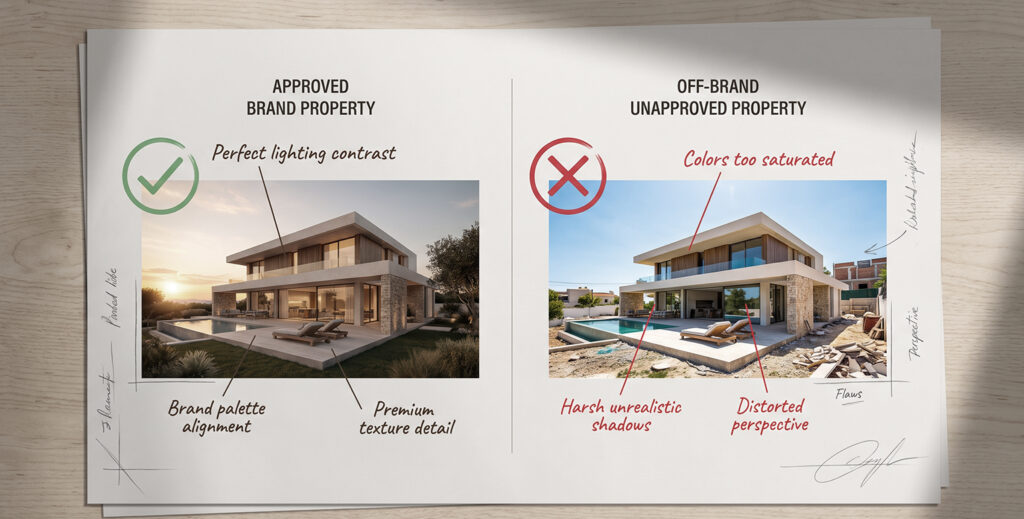
Decide what kind of photography reflects your brand. Should it feel warm and lived-in, or clean and architectural? Will you use drone shots, skyline views, lifestyle imagery, or close-up interior details?
For off-plan projects, CGI/visualisation becomes just as important as photography. Since buyers can’t walk through a finished property yet, your renders need to feel realistic, consistent, and true to the brand—not overly dramatic or misleading.
Your guide should cover:
- Photography style and lighting
- Drone and aerial imagery
- CGI/visualisation standards
- Icon styles and illustrations
- Image do’s and don’ts.
Good visuals don’t just sell a property. They shape how people remember the brand behind it.
Step 6: Define Your Brand Voice
Your brand should not only look consistent. It should sound consistent too.
Decide how you want to communicate. Are you formal or conversational? Confident or understated? Educational or sales-led? These choices help everyone, from marketers to AI writing tools, create content that feels like it is coming from the same brand.
Include:
- Brand voice attributes
- Tone for different situations
- Tagline and boilerplate
- Core messaging pillars
- Words to use—and words to avoid
- Naming rules for projects, phases, and unit types
Clear voice guidelines also make AI-assisted content much more accurate, helping teams produce faster content without losing the brand’s personality.
Step 7: Create Application & Compliance Templates
A style guide only becomes useful when people know how to apply it.
Your templates should include:
- Website layouts
- Social media posts
- Bayut and Property Finder listings
- Brochures and flyers
- Sales presentations
- Email signatures
- Outdoor advertising
For Dubai businesses, it is also worth documenting where Trakheesi permit numbers, RERA/DLD disclaimers, and other compliance elements should appear. When everyone follows the same templates, approvals become much smoother.
This is also where branding services for real estate agents add real value. Instead of every agent creating their own version, everyone works from one clear system that protects the brand.
Real Estate Brand Guide Checklist
| Component | What to Document | Why It Matters |
|---|---|---|
| Brand Foundation | Mission, audience, positioning, personality | Keeps every decision aligned with the brand. |
| Logo System | Logo versions, spacing, sizing, usage rules | Maintains consistency everywhere. |
| Colour Palette | Primary, secondary, and accent colours | Creates instant brand recognition. |
| Typography | Fonts, hierarchy, bilingual pairings | Keeps communication polished and readable. |
| Imagery & CGI | Photography style, CGI/visualisation, icons | Gives every campaign a consistent premium look. |
| Verbal Identity | Tone, messaging, vocabulary, naming rules | Makes the brand sound the same across every channel. |
| Application & Compliance | Templates, advertising rules, disclaimers | Helps teams work faster while staying compliant. |
Common Real Estate Branding Mistakes to Avoid
- Making it too complicated.
Keep it practical. A guide people actually use is far better than a 60-page document nobody reads. - Only focusing on visuals.
Your tone of voice matters just as much as your logo. - No co-branding rules.
Without clear guidance, developers, brokerages, and agents all present the brand differently. - Ignoring compliance.
Missing Trakheesi permits or incorrect project information can delay campaigns and create unnecessary issues. - Forgetting Arabic.
In Dubai, bilingual branding should be part of the plan from the beginning. - Never updating the guide.
Brands evolve. Your guidelines should too.
How Mint & Co. Helps Build Real Estate Brand Guidelines
Mint & Co. works with developers, brokerages, and luxury real estate brands to create complete brand systems—from positioning and visual identity to real estate visualisation and CGI, websites, real estate social media marketing, real estate SEO services, and practical application templates that teams can actually use. Whether you’re launching a new development or refreshing an existing brand, every element is designed to work together.
If you’re looking for inspiration, our collection of 15 real estate branding ideas and our luxury real estate branding guide offer practical ways to strengthen your brand before your next launch.
The Final Words
Well-documented real estate brand guidelines protect your identity as your business grows, helping every listing, campaign and customer interaction feel unmistakably yours. A thoughtful real estate brand book becomes something your entire team can rely on, keeping your brand consistent today and ready for tomorrow.
Got Questions? We've Got You.
What is a real estate brand style guide?
What should real estate brand guidelines include?
How is residential branding different from commercial property branding?
Residential branding is usually more emotional, focusing on lifestyle and community. Commercial property branding tends to emphasise business value, investment potential and functionality .
How do brand guidelines help real estate agents stay compliant in Dubai?
They can include approved templates with Trakheesi permit placement, RERA/DLD requirements and standard disclaimers, making it easier to produce compliant marketing every time.
How long should a real estate brand style guide be?
There’s no ideal length. The best guides are clear, practical, and easy to use. For most businesses, 20–40 well-organised pages are more useful than a document that’s twice as long.
Do individual real estate agents need their own brand guidelines?
Yes, especially if you’re building a personal brand. Even a simple guide helps keep your website, social media, presentations, and marketing consistent, making you easier to recognise and remember.