
Real Brokerage Brand Guide: Keep Agents On-Brand
Blogs, Real Estate
- Author: Rahul Shivaprakash

A real brokerage brand guide is only valuable if agents actually use it. The most successful brokerages don’t enforce branding by constantly correcting agents after something goes live. Instead, they make the right choice, the easiest one. Clear guidelines, ready-to-use templates, simple approval workflows, regular training, and occasional audits create consistency without slowing anyone down. That matters even more in Dubai.
A single brokerage may have dozens or even hundreds of agents, each promoting listings across Instagram, LinkedIn, WhatsApp, Bayut, Property Finder, and countless other channels. Every advert also needs to comply with Trakheesi requirements and accurately reflect RERA-approved property details. One off-brand post doesn’t just weaken the brokerage’s image; it can create unnecessary compliance risks too.
Whether you’re a brokerage owner, marketing director, or brand manager, the challenge is the same: how do you give agents enough freedom to build their personal reputation while keeping the brokerage instantly recognisable?
This guide explores exactly that. We’ll look at what brand enforcement actually means, why it’s particularly challenging in real estate, and the practical systems leading brokerages use to keep every listing, brochure, social post, and presentation consistently on brand.
What Does It Mean to Enforce Brand Guidelines Across Agents?
Enforcing brand guidelines simply means creating a system that helps every agent represent the brokerage consistently. It’s not about policing creativity. It’s about ensuring every piece of marketing still feels like it belongs to the same company.
A good real brokerage brand guide clearly defines what must remain consistent and where agents have room to personalise their marketing.
Typically, the rules look something like this:
Non-negotiable
- Logo usage
- Brand colours and typography
- Legal disclaimers
- Trakheesi permit placement
- Company messaging
Flexible
- Agent photographs
- Local market insights
- Personal introductions
- Neighbourhood expertise
- Individual communication style
Clear guidelines for real estate agents remove uncertainty. Instead of guessing what’s allowed, agents know exactly where their creative freedom begins and where the brokerage’s identity takes priority.

Why Brand Enforcement Is Harder in Real Estate
Real estate is different from most industries because agents market themselves almost as much as they market the brokerage.
Every day, individual agents create Instagram Reels, WhatsApp brochures, listing presentations, email campaigns, and social posts. Without a shared system, the brand quickly starts to look fragmented.
Some of the biggest challenges include:
Every agent becomes a marketer.
Unlike many businesses where marketing sits with one department, brokerages rely on dozens of people creating content every day. Keeping everything aligned isn't easy.
Small inconsistencies add up.
Different colours, outdated logos, inconsistent messaging, or poorly designed property brochures may seem minor on their own. Together, they dilute the brand and reduce trust.
Compliance is not optional.
Dubai property advertising must comply with Trakheesi and RERA regulations, including displaying valid permit numbers and approved property information. Even a single non-compliant advert can create unnecessary problems.
Consistency creates scale.
Brokerages that get branding right often appear much larger and more established than they actually are. Every agent reinforces the same identity, which builds recognition over time.
This is where working with a specialist brokerage branding agency and investing in strong real estate branding systems becomes valuable. Rather than fixing inconsistencies later, the right framework prevents them from happening in the first place.
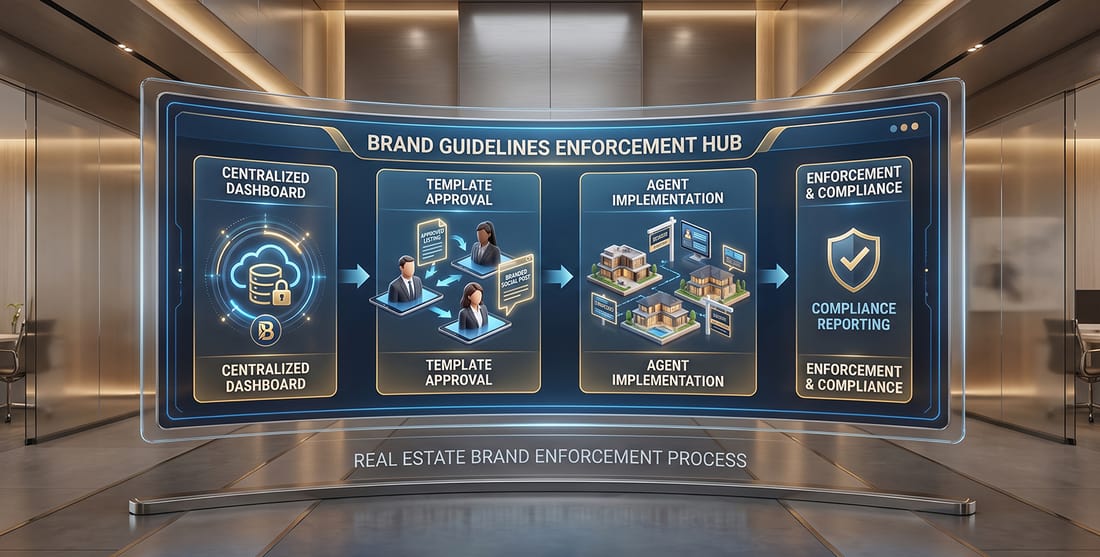
How Do Brokerages Enforce Brand Guidelines Across Agents?
Most successful brokerages follow a simple system. They do not rely on constant monitoring; they build processes that naturally encourage consistency.
Step 1 — Define the Non-Negotiables
Every brokerage should start by deciding what agents can never change.
This usually includes:
- Logo usage
- Primary colour palette
- Core typography
- Mandatory legal disclaimers
- Trakheesi permit placement
- Approved company messaging
At the same time, define what agents can personalise.
That might include:
- Headshots
- Contact information
- Local market commentary
- Community insights
- Personal introductions
When everyone understands the boundaries, branding becomes much easier to maintain.
Step 2 — Create One Practical Real Brokerage Brand Guide
Many brokerages make the mistake of producing a beautiful 70-page brand manual that nobody ever opens.
A better approach is a guide people actually use.
Keep it practical.
Include clear examples showing what good branding looks like—and what doesn’t.
Cover:
- Logo usage
- Colours
- Typography
- Social media layouts
- Listing templates
- Brochures
- Email signatures
- Presentation decks
A one-page quick reference is often the most useful section. Agents can check it in seconds before publishing new content.
Those everyday guidelines for real estate agents become much more valuable than a document that’s too long to read.
Step 3 — Centralise Assets and Templates
If agents have to create everything from scratch, they'll naturally improvise.
Instead, make great design easy to access.
Create a shared library containing:
- Listing templates
- Story and Reel layouts
- Brochures
- Presentation decks
- Logo files
- Approved fonts
- Brand photography
Editable sections allow agents to personalise contact details while protecting the overall design.
The same principle applies to real estate visualisation and CGI. Standardised renders, floor plans and marketing visuals help every development look consistent, regardless of who is promoting it.
Step 4 — Build a Fast Approval Workflow
Not every piece of marketing needs multiple rounds of review.
Routine content built using approved templates should move quickly.
Only custom campaigns, new creative concepts or major advertising materials should require approval.
A simple workflow usually works best-
- Pre-approved templates publish immediately.
- Custom designs go to marketing.
- Complex campaigns receive final brand approval.
The goal isn’t to slow agents down.
It’s to protect the brand without creating unnecessary bottlenecks.
Step 5 — Train and Onboard Every Agent
Even the best brand guide won't help if nobody knows how to use it.
Even the best brand guide won’t help if nobody knows how to use it.
Every new agent should go through a short brand induction that explains not just the rules, but the reasoning behind them. When agents understand that consistency helps them build credibility and generate more enquiries, following the guidelines feels far less restrictive.
Training should cover-
- Brand basics during onboarding
- Regular refreshers when the guide changes
- Examples of good and poor branding
- Best practices for real estate social media marketing
When agents see how a consistent online presence strengthens both their personal reputation and the brokerage’s image, they are far more likely to stick with it.
Step 6 — Audit, Measure and Improve
Brand consistency is not something you check once and forget.
As new agents join, platforms evolve, and regulations change, brokerages need regular reviews to keep everything aligned.
A simple audit every six months can include:
- Agent websites
- Listing portals
- Social media profiles
- Brochures
- Presentations
- Email signatures
Rather than treating mistakes as failures, use audits as coaching opportunities. Recognise teams doing it well, share examples, and update the guide whenever something new works better.
The strongest brands treat their guide as a living document—not something that’s filed away after launch.
Non-Negotiables vs. Agent Flexibility (At a Glance)
| Brand Element | Locked (Brokerage Controls) | Flexible (Agent Personalises) |
|---|---|---|
| Logo | Approved logo and placement | Not editable |
| Brand Colours | Official colour palette | None |
| Typography | Brand fonts and hierarchy | None |
| Legal / Trakheesi Disclaimer | Mandatory wording and permit placement | Not editable |
| Photography | Approved property imagery style | Agent headshots and local photos |
| Copy & Voice | Core brand messaging | Personal tone and neighbourhood insights |
| Contact Details | Company information | Individual phone number, email and profile |
| Local Market Messaging | Brand positioning | Community expertise and local market updates |
Swipe sideways to see the whole table →
Common Enforcement Mistakes Brokerages Make
Most branding issues do not happen because agents ignore the rules. They happen because the system makes inconsistency easier than consistency.
Some of the biggest mistakes include-
- Correcting agents after content goes live.
Fix: Make approved templates the default so agents start with the right design. - Creating a brand guide that is too long.
Fix: Keep it practical with real examples and quick-reference pages. - Giving agents no templates.
Fix: Provide ready-to-use assets so nobody has to design from scratch. - Making approvals too slow.
Fix: Auto-approve standard materials and only review custom work. - Ignoring advertising guidelines for real estate agents.
Fix: Build Trakheesi permit placement and legal requirements into every template.
How Mint & Co. Helps Brokerages Enforce Brand Guidelines
Building a strong brokerage brand is not just about creating a logo or choosing a colour palette. It’s about making sure every listing, brochure, social post, presentation and advert tells the same story.
Mint & Co. works with luxury real estate brands across Dubai to build complete brand systems—from real estate branding services and template libraries to real estate social media marketing, real estate visualisation and CGI and practical workflows that make consistency easy for every agent. Whether it is creating better co-branding between brokerages and agents, developing scalable systems for consistent branding across markets or refining fresh real estate branding ideas, the focus is always on helping brands grow without losing their identity.
Build Your Brokerage Brand System
The Final Words
Brand consistency isn’t created through constant monitoring. It’s created through better systems.
A clear real brokerage brand guide, supported by practical templates, simple approvals, regular training, and ongoing audits, allows every agent to strengthen the brokerage instead of unintentionally diluting it. That’s how growing brokerages become brands people instantly recognise.
Got Questions? We've Got You.
What is a real brokerage brand guide?
It’s a document that explains how your brokerage should look, sound, and present itself across every marketing channel. It keeps every agent working from the same playbook.
How do brokerages keep agents on-brand?
The best brokerages make it easy. They provide templates, shared assets, simple approval workflows, regular training, and occasional audits instead of relying on constant policing.
What should be non-negotiable in real estate brand guidelines?
Your logo, colours, fonts, legal wording, Trakheesi permit placement and core brand messaging should always stay consistent. Agents can personalise details like headshots, contact information and local market insights.
How do brand guidelines help real estate agents advertise compliantly in Dubai?
Clear guidelines build Trakheesi permit placement, approved messaging and RERA requirements into every template. That makes it much easier for agents to publish compliant adverts without second-guessing the rules.
How often should a brokerage audit its brand?
A review every six months usually works well. It is enough to spot inconsistencies, update templates, and keep everyone aligned as platforms and regulations evolve.
Should agents be allowed any branding freedom?
Absolutely. Personal branding matters too. Agents should be free to showcase their personality, local expertise, and communication style, while the brokerage’s core identity, visual standards, and compliance requirements remain consistent.
Tags: Get Leads, leads, Real Estate
Related articles

Real Estate Development PR: How Developers Launch Projects
Blogs, Real Estate

Real Estate Developer Marketing: The Complete Guide
Blogs, Real Estate
How to Build a Real Estate Development Marketing Plan
Blogs, Real Estate

10 Real Estate Development Marketing Strategies (2026)
Blogs, Real Estate
RERA Advertising Rules 2026: Developer Compliance
Blogs, Real Estate
Trakheesi Permit: Clear It Before Your Dubai Campaign
Blogs, Real Estate