

Dubai’s real estate market has always been bold and forward-looking. But the way properties are marketed today is changing. Buyers no longer look only at location, layouts, or price. They want projects that reflect lifestyle, identity, and meaning.
Branded residences like Binghatti City and Mercedes-Benz City show how strong branding is reshaping real estate marketing. This change is part of the digital transformation in real estate, where perception and storytelling now matter almost as much as square footage.
The Evolution of Real Estate Marketing in Dubai
Dubai’s real estate marketing has evolved alongside the city itself. What once focused mainly on technical details now centres on emotion, lifestyle, and brand value, helping projects connect with buyers on a deeper level.

From floor plans → lifestyle storytelling
Earlier, real estate marketing focused on floor plans, features, and prices. Today, it is about lifestyle, community, and aspiration. Digital transformation in real estate is the cause of this change because images, social media, and virtual experiences are highly important in shaping how buyers perceive a project.

From developer logos → global brand partnerships
Earlier, trust came mainly from the developer’s reputation. Today, global luxury brands help shape a project’s identity. Collaborations such as that between Binghatti City and Mercedes-Benz redefine how projects are positioned in global markets.
From price-led ads → perception-led campaigns
Developers are competing against each other on perception and not only on price. Projects are presented as symbols of lifestyle, design, and prestige, changing how buyers understand and value real estate.
What Are Branded Residences & Why They Matter Today?
Branded residences are homes developed with famous global brands, combining real estate with luxury, lifestyle, and brand identity. These brands contribute not just their name, but their design philosophy, aesthetics, and customer experience standards.
In Dubai, branded residences matter because they bridge real estate and global luxury culture. For buyers, branded residences stand for trust, prestige, and a promised lifestyle. For developers, they create a clear edge in an increasingly competitive market. To the investors, they are an indication of long-term value and cross-border appeal. This overlap of branding and property is a new stage in real estate marketing.
Case Study: Binghatti City and Mercedes-Benz
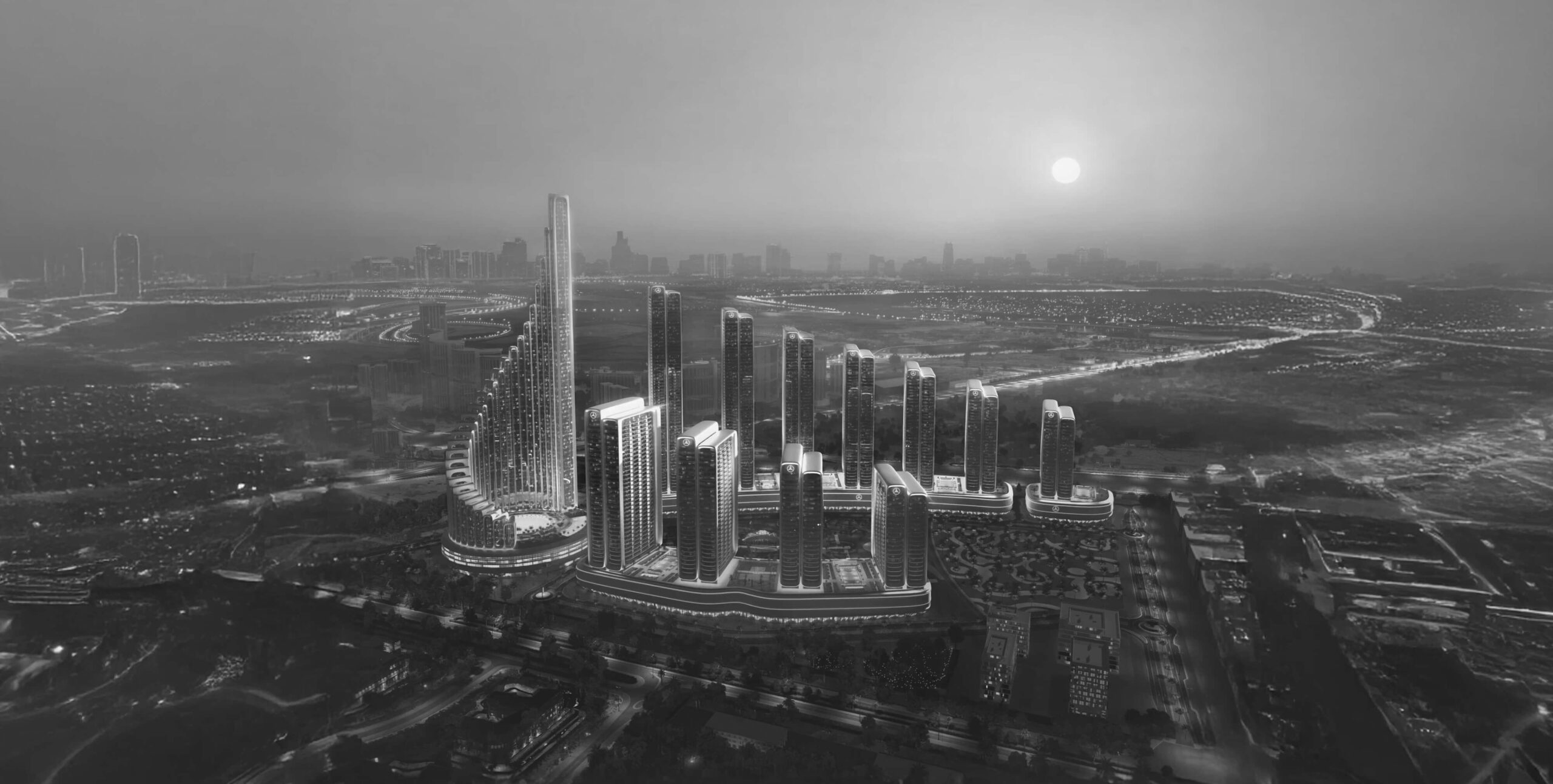
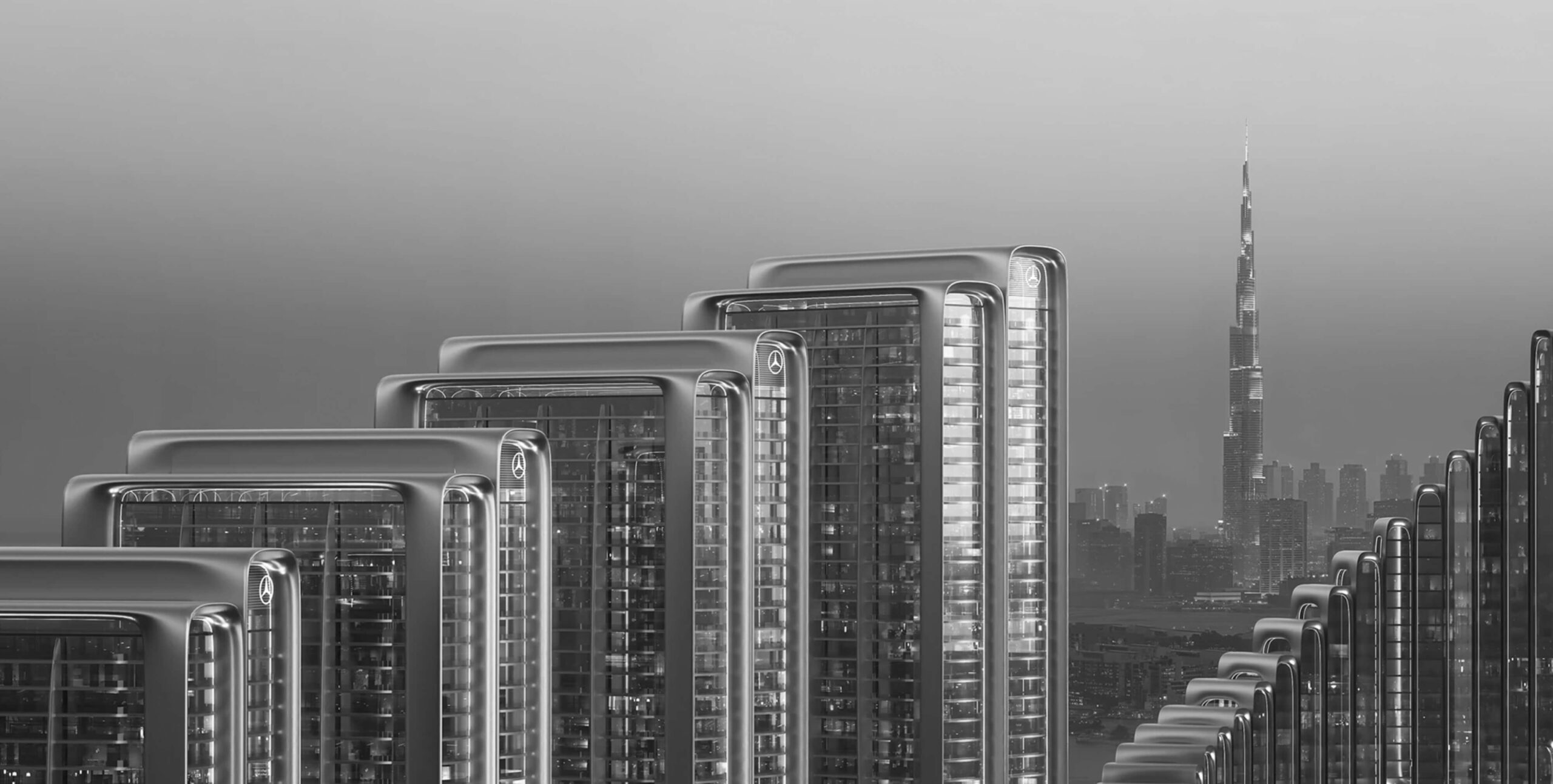
The partnership of Binghatti City and Mercedes-Benz is an interesting example of how branding reshapes real estate demand.
Brand halo effect
The association with Mercedes-Benz elevates the image of Binghatti City. The buyers subconsciously attribute the reputation of the brand in terms of innovation, luxury, and high engineering skills to the property itself.
Media amplification
Such projects as Mercedes-Benz City, by nature, draw the world media. The real estate platforms are not the only covered areas, but also lifestyle and luxury magazines, as well as businesses enhancing visibility without going through the normal advertising methods.
Global press reach
Branded residence tours the global news cycles, including the European, Asian, and Middle Eastern investors. This international presence enhances the status of Dubai as a high-end real estate destination.
Lifestyle association
In addition to architecture, Mercedes-Benz City is a lifestyle. Buyers are not just purchasing apartments—they are buying into a global luxury identity, which significantly influences purchasing decisions.
How Branding Transforms Real Estate Demand Generation
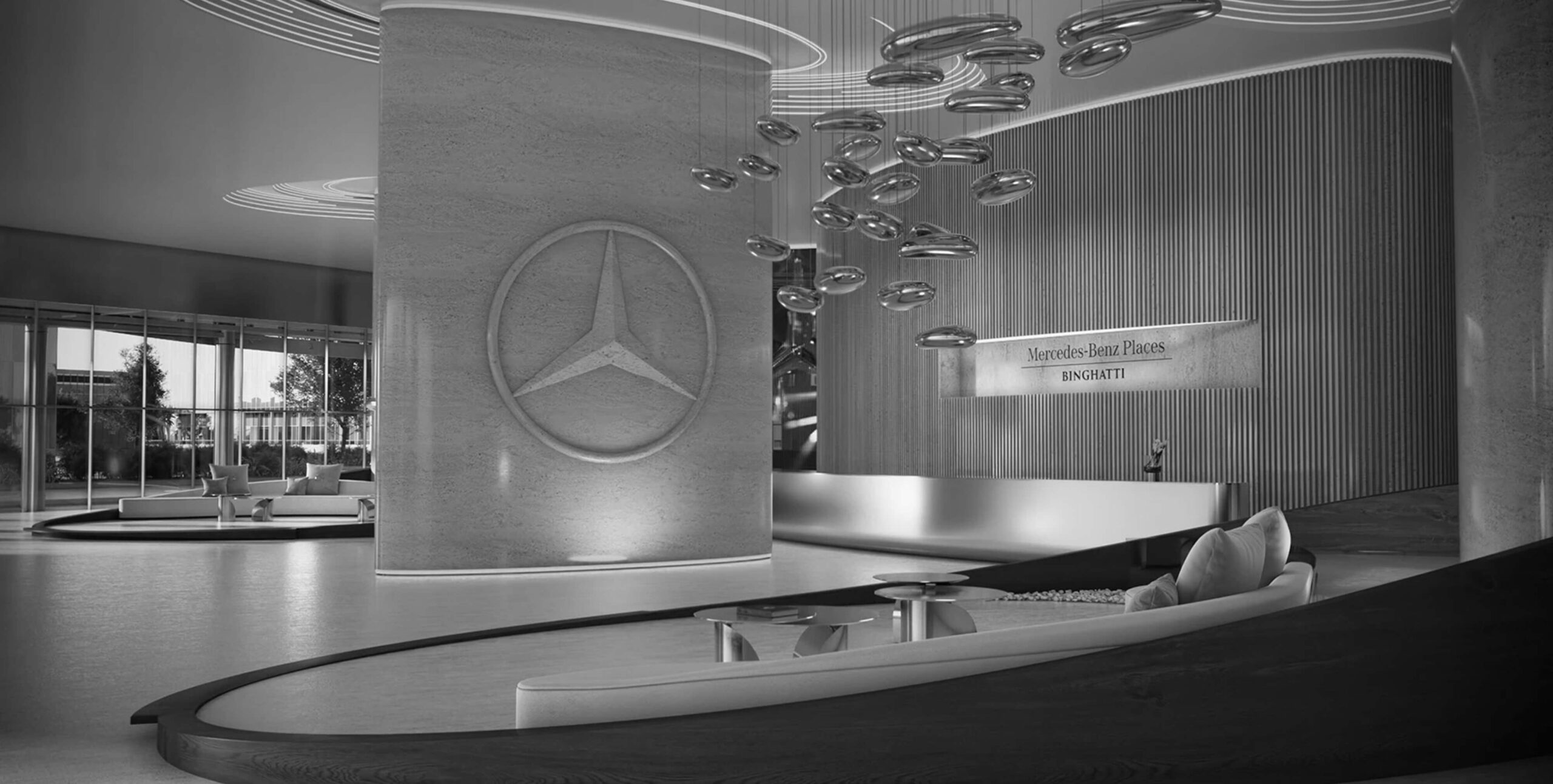
Branding has become a strategic engine of real estate demand rather than a decorative layer.
Branding reduces buyer risk
Strong real estate branding reassures buyers. When a project carries a globally trusted brand, uncertainty decreases, and confidence increases. This psychological reassurance plays a vital role in high-value property decisions.
Branding increases price elasticity
Branded projects usually command premium pricing. Buyers are willing to pay more because the perceived value extends beyond physical property to brand prestige, design philosophy, and long-term desirability.
Branding multiplies media exposure
Unlike traditional listings, branded residences generate organic discussions online, in influencer circles, and in international media. The resultant publicity generates sustained interest and demand.

Why Dubai Developers Are Embracing Brand Collaborations
Dubai developers work in one of the world’s most competitive real estate markets. Brand partnerships help developers stand out in a crowded market. At the same time, they match what modern buyers are looking for unique projects that reflect lifestyle, identity, and value, not just location and price. Modern buyers seek identity, storytelling, and emotional resonance not just investment returns. Branded residences meet these expectations while also supporting broader real estate marketing objectives such as global positioning, premium pricing, and long-term brand equity.
Moreover, collaborations reflect the future of real estate marketing, where projects are positioned not merely as assets but as cultural and lifestyle statements.
What Developers Can Learn From Branded Residences
Brand consistency
The successful branded projects have a well-integrated relationship between the architectural design, message, and brand values. This consistency makes the project story seem more natural and not forced.
Story-driven launches
Branded residences demonstrate the power of storytelling in real estate marketing. Launch campaigns are no longer transactional they are narrative experiences that connect emotionally with buyers.
Visual identity alignment
Design language, colour palettes, and visual storytelling must align with both the developer and partner brand. This alignment strengthens recognition and memorability across marketing channels.
Integrated digital + offline campaigns
Modern projects combine immersive digital strategies with experiential offline activations. This balance reflects the ongoing debate between digital vs traditional marketing, where the most successful campaigns integrate both rather than choosing one.

The future of real estate marketing in Dubai
Dubai’s property market is steadily moving toward a brand-led approach. As buyers become more discerning and globally connected, branding will become a more central part of property marketing.
Branded residences such as Binghatti City and Mercedes-Benz City are not isolated experiments, but the future of real estate marketing. The next phase of real estate marketing in the region will be created by developers who have adopted storytelling, collaboration, and strategic branding.
As Dubai’s real estate story continues to evolve, firms like Mint & Co. view real estate marketing not simply as promotion, but as positioning—helping developers turn projects into powerful narratives that connect with audiences worldwide.
Got Questions? We’ve Got You.
Mercedes-Benz Binghatti City is situated in Dubai and is strategically placed in one of the best urban areas in the city. Its location reflects Dubai’s vision of blending luxurious living with international brand identity.
Binghatti City can teach developers to concentrate on brand collaboration, integrated storytelling, and sustained brand positioning as opposed to short-term sales campaigns.
Media amplification extends the reach of branded projects beyond real estate buyers to global audiences. It transforms property launches into cultural events, which enhances demand and recognition of the brand in the long term.