
7 Real Estate PPC Strategies to Generate High-Intent Leads
Blogs, Real Estate
- Author: Rahul Shivaprakash

A Complete Guide to Real Estate PPC: Generating High-Intent Property Leads

Introduction
In the UAE property market, buyers do not follow a straight path. They move across search engines, listing sites, social platforms, and private networks before deciding. Attention is fragmented, and decision windows are short. Visibility alone is not enough. Intent and timing matter more.
Real estate PPC (pay-per-click) advertising puts the power back in your hands. It lets you bypass crowded third-party platforms and bring motivated buyers directly to your website, where you control the experience from the first click. Instead of waiting to be discovered, you meet demand as it forms.
A search like “buy apartment in Dubai Marina” signals clear intent. That matters far more than casual browsing. PPC in real estate captures this moment and moves users into a structured journey that leads to enquiries and site visits.
Campaigns do not need to be complex. With focused keywords, disciplined budgets, and the right formats, you attract high-quality traffic already interested in your offering.
For developers and brokers, this is more than a channel. It is a controlled entry point into the buyer journey that shapes first impressions, filters serious prospects, and connects demand directly to your inventory.
What is Real Estate PPC & Why It Matters Today
Real estate PPC refers to paid ads that appear when users search or browse online. These campaigns target people who show clear buying or investment intent.
As part of Real Estate Performance Marketing, PPC in real estate allows brands to guide users to their own platforms. This usually removes dependence on crowded listing sites and gives full control over how a project is presented.
In fast-moving markets, the first interaction usually shapes the final decision. PPC helps you manage that first impression with clarity.
Why PPC is a Game-Changer for Real Estate Lead Generation
Most traditional channels rely on passive discovery. PPC works differently. It responds to active demand.
Strong real estate performance marketing strategies use PPC to capture high-intent users and direct them into a structured funnel. The focus shifts from broad exposure to precise engagement.
This leads to better quality traffic and stronger conversion potential.
Talk to us about running PPC for your project
Step-by-Step Funnel on how Real Estate PPC Actually Works
Keyword Intent Targeting
Every real estate PPC campaign begins with understanding search intent.
A user searching “buy an apartment in Downtown Dubai” is ready to act. A user searching “Dubai property trends” is still exploring. These signals must be treated differently.
High-performing campaigns focus budget on keywords that reflect decision-stage intent.
Ad Copy That Sells Lifestyle, Not Property
Buyers rarely click on features alone. They respond to context.
Ad copy that highlights lifestyle, location, and long-term value usually performs better. It helps users picture the outcome, not just the asset.
In premium real estate, this shift is even more visible.
Landing Pages That Convert
Traffic has no value without conversion. The landing page carries that responsibility.
It must match the promise made in the ad. If the ad highlights waterfront living, the page must show it immediately.
Simple structure, clear messaging, and a direct call to action work best.
Retargeting High-Value Buyers
Most users do not convert on the first visit. They compare options before making a move.
Retargeting keeps your project visible during this phase. It reinforces recall and builds familiarity.
This step often decides whether interest turns into a lead.
Retargeting High-Value Buyers
Most users do not convert on the first visit. They compare options before making a move.
Retargeting keeps your project visible during this phase. It reinforces recall and builds familiarity.
This step often decides whether interest turns into a lead.
Lead Nurturing (Email + CRM)
A lead is not the final step. It is the start of a conversation.
Follow-ups through CRM systems and email help maintain engagement. They provide more details and keep the buyer interested.
This stage usually improves lead quality and readiness.
Lead Nurturing (Email + CRM)
A lead is not the final step. It is the start of a conversation.
Follow-ups through CRM systems and email help maintain engagement. They provide more details and keep the buyer interested.
This stage usually improves lead quality and readiness.

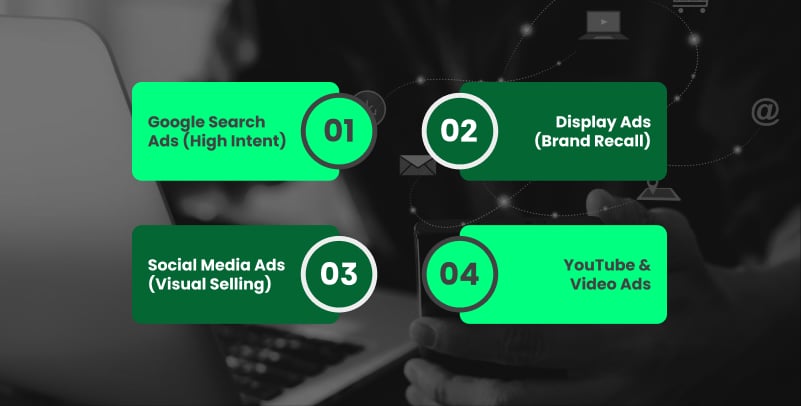
The Types of PPC Campaigns for Real Estate
Google Search Ads (High Intent)
Search campaigns capture users with clear intent. They are the most direct form of Google Ads real estate strategy.
They give instant visibility and bring in high-intent traffic. Results can be tracked clearly, which helps in measuring returns.
For many developers, this is the core source of pay-per-click real estate leads.
Display Ads (Brand Recall)
Display ads focus on visibility over time. They usually build familiarity rather than immediate action.
Content plays a major role here. Content that adds real value tends to perform better than generic ads. Area guides, investment insights, and clear location stories help buyers understand not just the property, but the life around it.
When people see this kind of content more than once, it starts to feel familiar. That familiarity builds trust over time and often leads to stronger interest and better conversion later.
Social Media Ads (Visual Selling)
Social platforms permit properties to be experienced visually.
Images and short videos highlight design, space, and lifestyle. This creates early interest before users move into deeper research.
In markets like the UAE, visual quality strongly influences perception.
YouTube & Video Ads (Luxury storytelling)
Video ads provide depth. They show the project, the surroundings, and the experience in a more complete way.
They also support local visibility through partnerships and digital placements.
For premium projects, this format adds strong narrative value within real estate PPC services.
See how we run PPC for real estate brands

Real Estate PPC Strategy That Drives ROI
Location-Based Targeting
Real estate demand is tied to location. Campaigns must reflect this clearly.
Targeting should include both property location and buyer origin. This improves relevance.
Budget Allocation Strategy
The budget should follow intent.
Search campaigns often receive higher allocation. Awareness campaigns support the broader funnel. This balance improves efficiency.
Cost Per Lead Benchmarks
In real estate PPC, the average CPC is around $2 to $3. Conversion rates usually range between 2 and 3 percent.
These numbers vary based on project type, competition, and targeting accuracy.
Conversion Rate Optimization (CRO)
Small changes can improve results.
Refining landing pages, simplifying forms, and testing messages may increase conversions without increasing spend.
Common PPC Mistakes Real Estate Brands Make
Several campaigns struggle due to weak alignment.
When targeting is too wide, messages feel vague, and landing pages lack clarity, campaigns struggle to perform. Some brands also see PPC as a quick fix instead of building it into a larger, consistent system.
If the journey from ad to enquiry does not feel connected, results stay limited, and leads rarely convert.
PPC vs SEO vs Social Media – What Works Best?
Each channel serves a different role.
SEO builds long-term visibility. PPC captures immediate demand. Social media builds engagement and recall.
Strong strategies combine all three. Each channel supports the others.
Real Estate PPC Trends in 2026
Targeting is becoming more precise. AI tools are enhancing how budgets are spent.
Personalized messaging is increasing. Ads now reflect user behavior more closely.
Video continues to gain importance, especially in premium real estate segments.
How to Build a High-Converting PPC Campaign (Checklist)
Strong campaigns follow a clear and connected structure from start to finish. Each step builds on the previous one and keeps the user journey focused.
Keyword research sets the direction. It may help you understand what buyers are actively searching for and how close they are to taking action. Ad creatives then shape that interest. Clear messaging and relevant visuals usually draw attention and set expectations.
Landing pages carry that momentum forward. They should match the ad, answer key questions, and make it easy for users to take the next step. Tracking systems record what happens after the click, so you know which campaigns bring real enquiries and which need adjustment.
Ongoing refinement keeps performance steady. Small changes in targeting, messaging, or design often lead to better results over time.
Each stage must connect smoothly with the next. When this flow is aligned, campaigns usually attract better leads and convert them more consistently.
Why Most Real Estate PPC Campaigns Fail
Several campaigns fail due to poor planning.
They focus on clicks instead of intent. Messaging lacks clarity. Landing pages do not match the ad.
Without alignment, traffic does not convert into leads.
How Mint & Co. Drives Real Estate PPC Results
Effective real estate PPC sits within a larger system.
Mint & Co. works closely with real estate brands that value clarity, disciplined execution, and consistent demand over time. It treats real estate PPC as part of a broader strategy that connects brand positioning with demand capture. The focus stays on attracting the right audience and guiding them with clarity.
This approach improves lead quality and consistency over time.
Ready to generate high-intent property leads? Let's talk.
Got Questions? We've Got You.
Is PPC worth it for real estate agents?
Yes. It connects you straight to people who are already looking to buy or invest. That means you rely less on third-party platforms and have more control over how you present your project and engage with potential buyers.
What is the average cost per click (CPC) for real estate PPC?
CPC usually ranges between $2 and $3, depending on competition and location.
How can I improve PPC lead quality in real estate?
Use intent-based keywords, clear messaging, and strong landing page alignment.
How do I optimize landing pages for real estate PPC?
Keep the message focused. Match it with the ad. Make the next step simple and clear.
Tags: Get Leads, leads, Real Estate
Related articles

Real Estate Development PR: How Developers Launch Projects
Blogs, Real Estate

Real Estate Developer Marketing: The Complete Guide
Blogs, Real Estate
How to Build a Real Estate Development Marketing Plan
Blogs, Real Estate

10 Real Estate Development Marketing Strategies (2026)
Blogs, Real Estate

RERA Advertising Rules 2026: Developer Compliance
Blogs, Real Estate
Trakheesi Permit: Clear It Before Your Dubai Campaign
Blogs, Real Estate