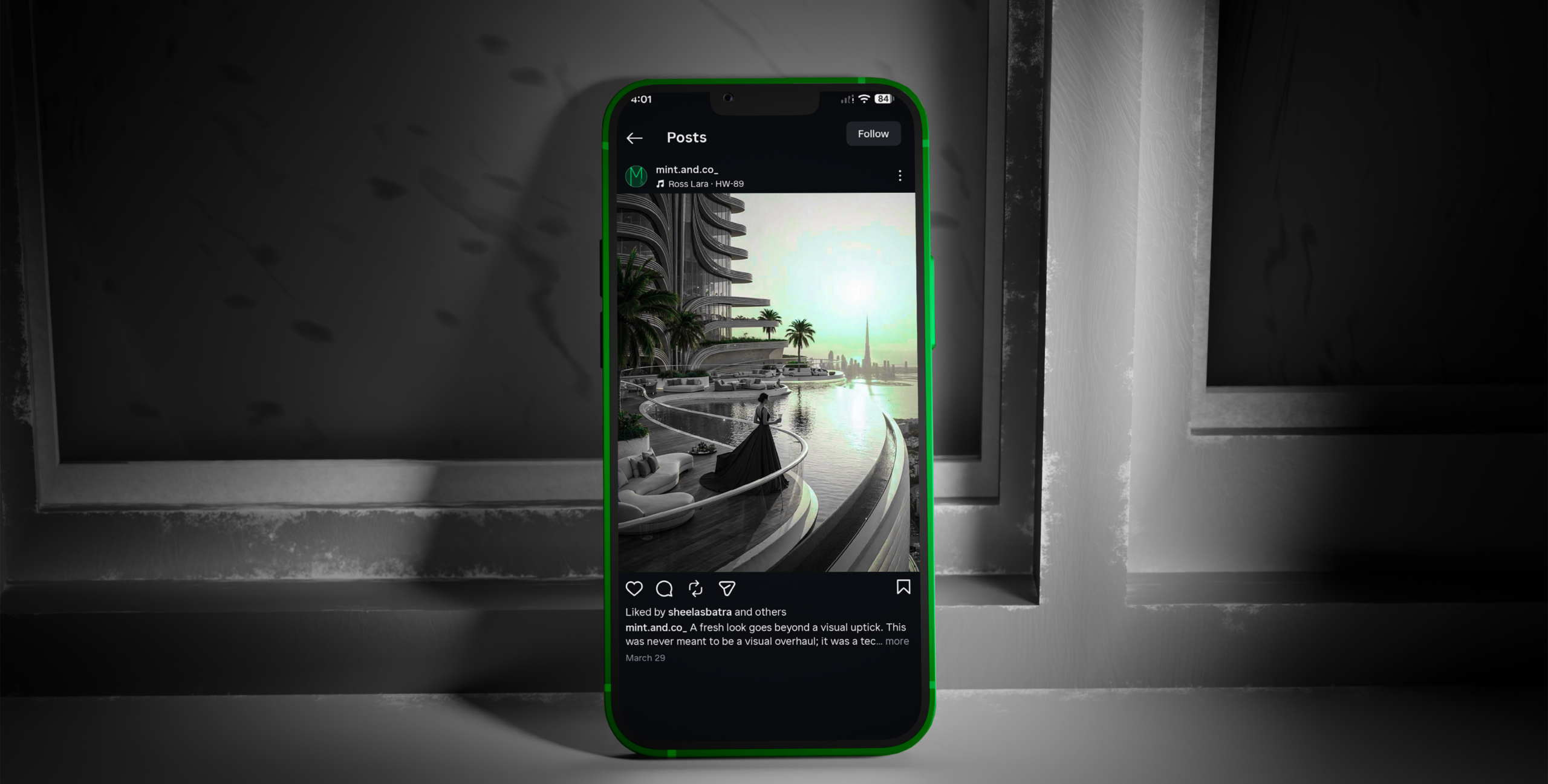



Real estate marketing in 2026 is markedly different from just a few years ago. Buyers are more informed, property journeys start online, and expectations for speed, personalization, and transparency are higher than ever. In competitive, innovation-driven markets like the UAE, AI is no longer a future idea—it now underpins how properties are marketed, discovered, and sold.
For developers, brokerage leaders, and marketing heads, the change is both practical and strategic. AI is reshaping how demand is analyzed, how buyers are engaged, and how decisions are made across the property lifecycle.

Why AI Is Reshaping Real Estate Marketing
In 2026, real estate marketing is no longer defined by listings and brochures; it is defined by intelligence. Artificial intelligence has moved from experimentation to infrastructure, powering how properties are discovered, evaluated, and sold. For developers, brokerage leaders, and marketing heads in the UAE, AI for real estate marketing is now less about novelty and more about competitive positioning.
The shift is structural: marketing is becoming predictive, visual, automated, and deeply personalized. Firms adopting AI-driven real estate marketing are not simply optimising campaigns; they are redesigning the buyer journey itself.

The Digital Shift in Buyer & Seller Behaviour
Search-first home buying
Property discovery now begins online. Buyers increasingly rely on portals, search platforms, and AI-curated recommendations before ever contacting an agent. Visibility is no longer driven by brand alone, but by relevance — shaped by ranking signals and behaviour data within AI in real estate marketing systems.
Data-driven decisions
Today’s investors and end-users evaluate properties through analytics: price trends, rental yields, neighborhood growth, and infrastructure plans. Real estate AI platforms aggregate and interpret these signals, turning marketing from persuasion into insight delivery.
Instant communication expectations
Response time has become a brand signal. Buyers expect immediate answers, availability checks, and tailored property matches. AI-enabled interfaces now handle much of this early interaction in UAE property journeys.

Limitations of Traditional Real Estate Marketing
The gap between digital vs traditional real estate marketing is now clear. Traditional methods like print ads, static listings, broad campaigns rely on assumptions and slow feedback. They cannot personalize at scale or adapt quickly to buyer intent.
AI-enabled marketing, in contrast, is responsive. Messaging adjusts to behavior, creatives evolve with engagement, and campaigns optimize continuously. For senior decision-makers, this means competitiveness increasingly depends on intelligence embedded across the marketing stack.
5 Powerful Ways AI Is Reshaping Real Estate Marketing
AI-Powered Virtual Property Tours and Immersive Experiences
Immersive visualisation is now central in UAE off-plan and luxury segments. AI enhances virtual tours through automated staging, lighting refinement, layout personalisation, and lifestyle simulation, helping prospects imagine living in the space.
For international buyers, this removes geographic barriers. Properties are not just viewed; they are experienced remotely. AI-generated neighbourhood visuals and future development overlays further strengthen pre-completion marketing.
Automated Property Listing Creation and Optimization
Listing creation, once manual and inconsistent, is increasingly automated by real estate AI. Systems generate descriptions, highlight amenities, optimise keywords and adapt tone across portals and channels.
For brokerage leaders managing large inventories, AI for real estate agents reduces production time while improving discoverability. Listings evolve based on search trends and engagement data, maintaining relevance across platforms.
AI-Driven Digital Advertising and Campaign Optimisation
Media targeting has shifted from demographics to intent. AI analyzes browsing patterns, property interactions, location signals, and investment behavior to identify high-probability buyers.
Campaigns then self-optimise across search, social, display, and portals — shifting spend toward audiences and creatives delivering stronger conversion. In competitive UAE markets, this precision significantly lowers cost per qualified lead.
AI Chatbots for 24/7 Lead Qualification
AI chat systems now handle the first stage of buyer interaction: answering queries, suggesting suitable properties, booking viewings, and understanding budgets or preferences.
Because they learn from conversations and connect with CRM data, they respond more intelligently over time. For developers and brokerages, this means every enquiry is captured and nurtured, even outside office hours — especially valuable when working with international buyers across time zones.
Smart Ad Targeting & Budget Optimisation
AI does not only target audiences; it predicts timing. Algorithms identify when prospects are most receptive to property messaging and adjust delivery accordingly. Budgets shift in real time toward campaigns, geographies, and segments gaining traction.
This moves marketing from periodic launches to continuous demand generation — a hallmark of mature ai driven real estate marketing.

How to Implement AI in Your Real Estate Marketing
To implement AI in your real estate marketing, you must do the following:
1. Audit Your Funnel
Map the buyer journey from awareness to transaction. Identify where drop-offs, delays, or weak personalisation occur. AI should address friction, not be adopted for novelty.
2. Identify Automation Gaps
Common opportunities include listing production, lead qualification, segmentation, campaign optimisation, and analytics reporting. Prioritise high-volume, repeatable tasks.
3. Deploy AI Tools
Bring AI into every part of your marketing stack, like CRM, ads, content, and customer interactions, so information flows smoothly across systems. When each tool works together, AI can deliver its full value; when they are siloed, its impact stays partial.
4. Optimise & Scale
AI improves with data. Track performance, refine models, and expand automation into retention, investor engagement, and lifecycle marketing.

Benefits of AI in Real Estate Marketing
Here are the benefits of AI in real estate marketing:
Personalized marketing:
AI tailors property recommendations and messaging to individual intent, improving engagement and relevance.
Improved efficiency-
Automation reduces manual effort in listings, campaigns, and lead handling, freeing teams for strategy and relationships.
Enhanced customer insights-
Behaviour analytics reveal preferences, price sensitivity, and decision triggers — valuable for launch planning and positioning.
Better decision-making-
Predictive insights support pricing, launch timing, and media allocation, replacing intuition with evidence.

The Future of AI in Real Estate Marketing
Predictive Analytics and Intelligent Market Forecasting
AI models increasingly forecast demand, pricing trends, and investment hotspots using economic and mobility data. UAE developers can anticipate buyer flows earlier, shaping acquisition and positioning strategy.
Enhanced Visual Storytelling Through AI
Generative AI is transforming property storytelling: adaptive renders, lifestyle narratives, and visuals personalised by audience segment. Marketing assets may evolve dynamically rather than remain static.
Sustainability, Smart Efficiency, and AI-Driven Optimization
AI will also reshape how sustainability is communicated — modeling energy performance, environmental impact, and smart-building efficiency for buyers. ESG messaging in real estate may become data-driven and interactive.

Building an AI-Driven Real Estate Marketing Ecosystem in 2026?
For UAE developers and brokerage leaders, advantage now depends on integration depth. An AI-enabled ecosystem connects property data, customer behavior, media performance, and market intelligence into a unified decision layer.
The fastest-moving organisations are not just adopting tools; they are reorganising marketing around intelligence loops — where each interaction informs the next. Mint & Co. is a strategic partner supporting real estate brands in aligning creative, media, and data infrastructure into measurable growth systems, enabling developers and brokerages to translate market intelligence into sharper positioning, stronger visibility, and sustained demand generation.
In 2026, real estate marketing is becoming predictive, immersive, and continuously optimised.
For UAE decision-makers, the strategic question is no longer whether to adopt AI — but how deeply it should shape the entire marketing lifecycle.
Got Questions? We’ve Got You.
AI automates listings, personalizes recommendations, optimizes digital advertising, qualifies leads via chatbots, and analyzes buyer behavior — forming the foundation of modern ai in real estate marketing.
AI enhances virtual tours by automatically staging spaces, improving lighting, adjusting layouts, and adding interactive elements. This helps remote buyers in Dubai explore properties more realistically before visiting in person.
In Dubai property management, AI supports tenant communication, predictive maintenance, pricing optimisation and occupancy forecasting.