
WhatsApp Lead Automation for Dubai Real Estate Agents
Blogs, Real Estate
- Author: Rahul Shivaprakash

Ask any broker in Dubai where their leads actually talk to them, and the honest answer is WhatsApp. Not the enquiry form, not email, not a returned missed call, the green tick. WhatsApp lead automation is simply the discipline of treating that reality as a system: every enquiry answered in seconds, qualified with a few sharp questions, logged in your CRM, and nurtured until the client is ready to view without an agent glued to their phone at 11 pm.
Done properly, WhatsApp marketing for real estate has nothing to do with forwarding property PDFs to numbers you scraped. It is a defined flow that runs whether you are on a viewing, on a flight, or asleep. And it is the same real estate automation that developers already lean on for off-plan launches now within reach of a single agent or a ten-desk brokerage, at a fraction of the cost it carried three years ago.
This playbook is written for the Dubai market specifically. It covers what WhatsApp lead automation is, why it out-converts every other channel you run, the exact five-stage workflow to build, the tools worth shortlisting in 2026, the mistakes that quietly burn leads, and the DLD and RERA rules you cannot automate your way around. By the end you will have something concrete enough to hand to a developer or an agency and say: build this.
What is WhatsApp lead automation in real estate?
WhatsApp lead automation is the use of the WhatsApp Business Platform to capture, answer, qualify, and follow up on property leads without manual effort. It ties together three things: click-to-WhatsApp ads and portal enquiries as the source, a chatbot or auto-responder as the first reply, and a CRM as the memory so that every lead gets an instant, structured conversation and none slips through the cracks.
Underneath, it rests on three parts. First, a WhatsApp Business number verified through Meta. Second, an automation layer that the chatbot flows, saved replies, and approved broadcast templates. Third, a CRM that records each lead and the stage it is at. A solo agent can run the free WhatsApp Business App; the moment you advertise at scale or share an inbox across a team, you need the WhatsApp Business API through a Meta-approved provider.
Why is WhatsApp the highest-converting channel for Dubai property agents?
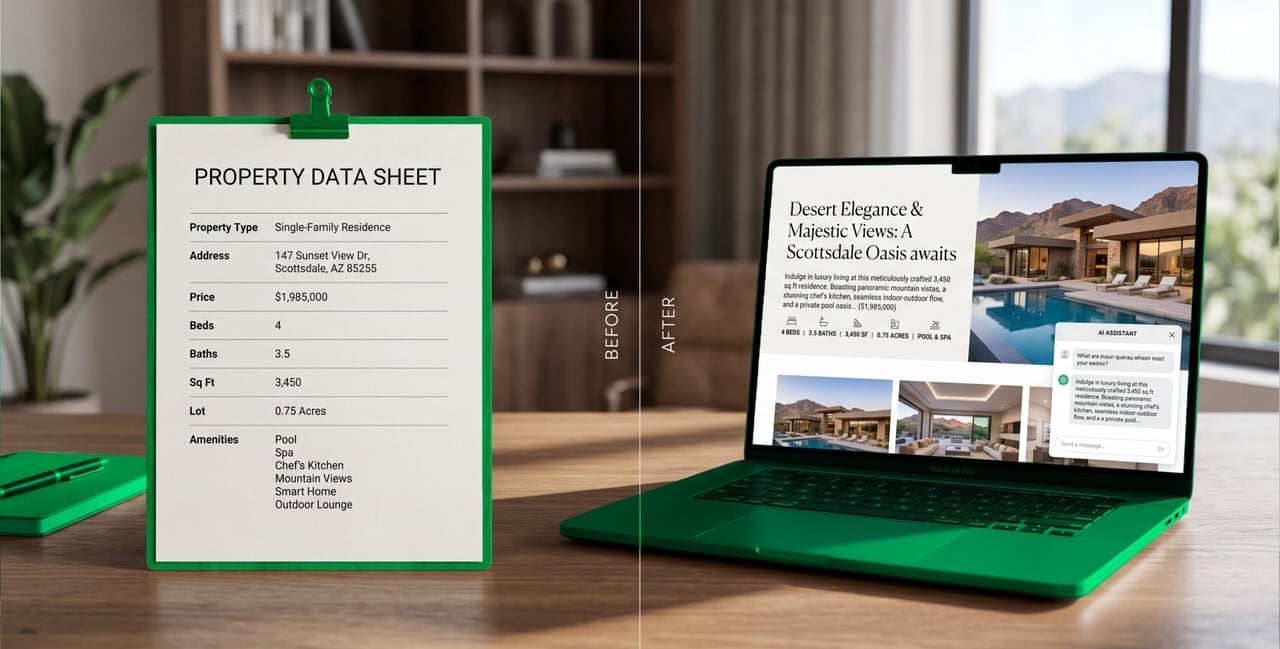
WhatsApp converts better because it lives where the buyer already is, and because the message actually gets opened. The app crossed 3.3 billion monthly users in early 2026 (external, no-follow) and is effectively the default channel across the UAE. An enquiry you answer here lands somewhere the client checks all day not an inbox they clear once a week.
The gap over your other channels is not subtle, which is exactly why brokerages are moving follow-up onto WhatsApp:
- Read rates are reported around 95–98% (rigorous opt-in studies land nearer 68% still far ahead of email’s 20–30%).
- Close to 58% of WhatsApp messages get a reply inside one minute, against hours for email.
- Click-to-WhatsApp campaigns report 45–60% conversion, versus the 2–5% that email and SMS typically deliver.
There is a local reason too. Dubai’s two heavyweight portals, Bayut and Property Finder, now put click-to-WhatsApp buttons directly on listings, so a buyer’s first move is a message, not a form. Feed that with a serious real estate social media marketing presence on Instagram and TikTok where most property discovery in the UAE now begins and the same automated inbox fills with warmer, better-qualified conversations.
Why is WhatsApp the highest-converting channel for Dubai property agents?
The system runs in five stages: capture, instant reply, CRM sync, nurture, and compliant broadcasting. Each is a piece of real estate automation you configure once and leave running.
1. Capture leads from Bayut, Property Finder and Meta ads
Funnel every source into one WhatsApp inbox portal enquiries, click-to-WhatsApp ads on Instagram and Facebook, the QR code on a hoarding, the button on your website. The buyer skips the form and the callback wait; they are already in a live conversation with you from the first tap.
2. Instant auto-reply and a lead-qualification chatbot
The instant a message arrives, an automated greeting fires and a short bot asks the three questions that expose intent: budget, area, and off-plan versus ready. In seconds, you know whether this is a committed Downtown buyer or a weekend browser. The better flows use AI marketing tools to read free-text answers and route each lead to the right agent automatically, in English or Arabic.
3. Sync every lead into your CRM
Each conversation and its answers drop straight into your CRM, tagged by stage, the moment they happen. A WhatsApp-integrated real estate CRM means no deal lives only in one agent's personal chat — the kind that disappears the day they resign. This shared, queryable record is the real backbone of marketing automation for real estate agents: one lead, one history, visible to the whole desk.
4. Automated nurture sequences and site-visit booking
Most leads are not ready on day one, so the system keeps the thread alive for you — a morning reminder, a matching listing a few days later, a viewing slot the client confirms with a single tap. For paid campaigns this is where the money is recovered: layering WhatsApp follow-up over your real estate performance marketing turns costly clicks into booked viewings instead of leads that die in an unread inbox.
5. Broadcast off-plan launches — RERA and Trakheesi compliant
Opt-in broadcasts let you push a new off-plan launch to your qualified list in minutes rather than days. The rule you cannot design around: in Dubai, every property advertisement a WhatsApp broadcast included must carry a valid Trakheesi permit number and meet DLD and RERA advertising standards. Automate the sending; keep the template permit-referenced and compliant. One flagged number can cost you the entire channel.
Book a Social Media Strategy Call
WhatsApp automation vs other real estate lead channels
Set side by side with the channels a Dubai desk already runs, the case for WhatsApp is easy to read:
| Channel | Open / read rate | Avg. response | Conversion | Best use for Dubai agents |
|---|---|---|---|---|
| WhatsApp automation | ~95–98% claimed (≈68% measured) | Under 1 minute (auto) | 45–60% | Instant lead reply, qualification, off-plan broadcasts |
| ~20–30% | Hours to days | 2–5% | Long-form nurture, brochures, contracts | |
| SMS | ~90% open | Minutes | 2–5% | OTPs, viewing reminders, short alerts |
| Phone call | N/A (missed calls high) | Only if answered | Varies | Hot-lead closing, negotiation |
| Instagram DMs | High but inconsistent | Minutes to hours | Low–moderate | Top-of-funnel discovery from social content |
Swipe sideways to see the whole table →
Figures reflect published 2026 WhatsApp benchmarks; read the widely quoted 95–98% open rate as a claimed number and ~68% as the measured opt-in benchmark. Source
Best WhatsApp automation tools for Dubai realtors in 2026
There are three practical tiers. The right one comes down to your lead volume and whether you run paid ads:
- WhatsApp Business App — free, with quick replies and labels. Fine for a solo agent at low volume, but no real chatbot and no shared inbox.
- API through a Meta-approved provider (BSP) — platforms such as AiSensy, Wati or Interakt add chatbots, approved broadcast templates and multi-agent inboxes. This is the tier you need once click-to-WhatsApp ads are running.
- CRM-integrated platforms — real-estate CRMs like PropSpace bundle WhatsApp with listing and lead management, so capture, qualifying and pipeline all sit in one place.
Judge any shortlist on three questions: does it run on the official API (never grey-market tools that risk a ban), does it connect to your CRM and the portals, and does its template approval and support actually cover the UAE?
Common mistakes Dubai agents make with WhatsApp automation
The channel rewards discipline and punishes shortcuts. The recurring errors:
- Messaging non-opt-in lists — scraped numbers get reported, and reports get your number banned.
- A robotic tone with no human handoff — the bot should qualify, then pass a hot lead to a person fast.
- Ignoring permit rules — broadcasts with no Trakheesi number or non-compliant creative are a genuine risk, not a technicality.
- No CRM sync — leads stranded in one agent’s phone are gone the day they leave.
- Over-messaging — daily blasts teach buyers to mute and block; relevance beats frequency every time.
Where WhatsApp fits in your wider real estate marketing automation stack
WhatsApp closes conversations; it does not, on its own, create the demand that starts them. It works best as the conversion layer sitting on top of a machine that is already earning attention. Strong real estate SEO services bring in buyers actively searching your areas and projects, while a joined-up real estate digital marketing programme keeps your name in front of them between visits.
This is really real estate social media automation wired to messaging: content earns the click, the ad opens a WhatsApp chat, the bot qualifies, the CRM remembers. And people only message a broker they already trust a little which is why the presence underneath matters. Our guide on how a website helps real estate agents build a brand walks through that trust layer in detail.
WhatsApp automation trends to watch in 2026
Four shifts are worth designing around this year rather than bolting on later:
- AI voice-note and free-text replies that answer real buyer questions in natural language instead of rigid button menus.
- Bilingual Arabic–English bots not a nicety in Dubai’s mixed buyer base, but a measurable conversion edge.
- WhatsApp Pay-style flows for collecting reservation fees or booking deposits inside the chat itself.
- Richer click-to-WhatsApp ad formats from Meta that arrive pre-loaded with the buyer’s intent before you say a word.
Automation multiplies your voice, so that voice has to hold steady everywhere a buyer meets it chat, social, portal, hoarding. Keeping tone and identity consistent across all of them is a discipline in itself; how to maintain consistent real estate branding across markets covers how the strongest Dubai brands hold that line as they scale.
Bring automation and brand together with Mint & Co.
Automation wins the speed race. Brand and marketing win the trust race. In Dubai’s luxury segment you need both working together, because a fast reply from a name nobody recognises still loses to a slower one from a brand the buyer respects. Mint & Co. is a Dubai-based luxury real estate marketing and branding agency that builds the whole stack — the demand engine, the automated conversations, and the brand that makes buyers reply. If you want a WhatsApp lead system wired into marketing that actually feeds it, we will scope it with you.
Got Questions? We've Got You.
Is WhatsApp marketing allowed for real estate agents in Dubai?
Yes, as long as you message contacts who opted in and every property advertisement carries a valid Trakheesi permit number and follows DLD and RERA advertising rules. Broadcasting to scraped, non-consenting numbers is not permitted and puts your number at risk of a ban.
How much does WhatsApp automation cost for a real estate agency?
The WhatsApp Business App is free. API-based automation costs the provider’s subscription plus Meta’s per-conversation charges, which vary by conversation type and volume. Budget for the tool and setup rather than expecting a single flat fee.
Do I need the WhatsApp Business API or just the Business app?
A solo agent at low volume can start on the Business App. Once you run click-to-WhatsApp ads, want a qualifying chatbot, or need a shared multi-agent inbox, you need the API through a Meta-approved business solution provider.
Can WhatsApp automation integrate with my real estate CRM?
Yes. Most API providers and real-estate CRMs such as PropSpace connect WhatsApp directly, so every lead, its answers and its stage sync automatically instead of living in one agent’s phone.
How fast should agents respond to a WhatsApp property lead?
Within a minute which is the whole point of automating it. An instant auto-reply plus one qualifying question holds the lead until a human takes over, and roughly 58% of WhatsApp messages already get a reply inside a minute.
Does WhatsApp automation work with Bayut and Property Finder leads?
Yes. Both portals offer click-to-WhatsApp and enquiry options, and those chats can be routed into the same automated inbox and CRM as your ad and website leads.
Will automated messages get my WhatsApp number banned?
Not if you use the official WhatsApp Business Platform, message opt-in contacts, stick to approved templates, and avoid spammy frequency. Bans come from grey-market tools and unsolicited blasting, not from compliant automation.
Tags: Get Leads, leads, Real Estate
Related articles
Real Estate Development PR: How Developers Launch Projects
Blogs, Real Estate

Real Estate Developer Marketing: The Complete Guide
Blogs, Real Estate
How to Build a Real Estate Development Marketing Plan
Blogs, Real Estate

10 Real Estate Development Marketing Strategies (2026)
Blogs, Real Estate
RERA Advertising Rules 2026: Developer Compliance
Blogs, Real Estate
Trakheesi Permit: Clear It Before Your Dubai Campaign
Blogs, Real Estate