Real Estate Developer Marketing: The Complete Guide
Blogs, Real Estate
- Author: Rahul Shivaprakash
Real estate developer marketing is the strategic promotion of a property development project to investors, end-users and broker networks, from pre-construction through sellout. Unlike single-property agent marketing, property development marketing has to build demand for an entire project, often before the first unit exists, while managing multiple audiences, price points and a sales timeline that can stretch across several years.
A developer is not simply trying to generate enquiries for one available property. The objective is to establish a market position, create confidence in an unbuilt or partially built asset, support the broker network and maintain demand until the inventory is sold. That makes real estate developer marketing a longer-running and more commercially integrated discipline than conventional listing promotion.
This guide looks at the full journey: research and positioning, pre-launch, launch and post-launch activity; the channels that support a development; broker programmes, branding and investor marketing; website infrastructure; Dubai compliance; measurement and common mistakes; and the trends shaping marketing in real estate development in 2026.
What Is Real Estate Developer Marketing?
Real estate developer marketing is the promotion of an entire development its units, positioning, price tiers, amenities, location and delivery proposition rather than the marketing of a single existing home.
The difference becomes clear when the audiences are considered. A developer may be speaking to an investor looking for returns and payment flexibility, an end-user considering lifestyle and location, and a broker looking for inventory, commission clarity and sales material often within the same campaign.
The work can begin months before construction is complete and continue well after launch.
In practical terms, real estate development marketing connects brand positioning, demand generation, sales enablement and reputation around one commercial objective: moving the project from concept to sellout.
Why Developer Marketing Needs a Different Playbook
Marketing an existing home is largely about presenting a known asset. A developer is often asking the market to believe in something that is still taking shape. Visualisation, credibility and consistency therefore carry greater weight.
A typical development campaign also has a much longer commercial runway.
- Longer sales cycle: Pre-launch, launch and post-launch activity may continue for 12–24 months or longer.
- Larger budget decisions: Marketing budgets are usually planned against projected sales value and divided between brand-building, paid demand generation, content, PR and broker enablement.
- Multiple audiences: Investors, end-users and brokers need different reasons to act without the central project story becoming fragmented.
- Inventory pressure: The campaign ultimately has to help sell a defined number of units within the developer’s business plan.
- Trust before completion: The less tangible the asset, the more important credible branding, CGI, project information, developer reputation and proof points become.
That is why marketing for property developers cannot be treated as a larger version of listing advertising. It is closer to building and managing a market around an asset.
Start With Research and Positioning, Not Ads
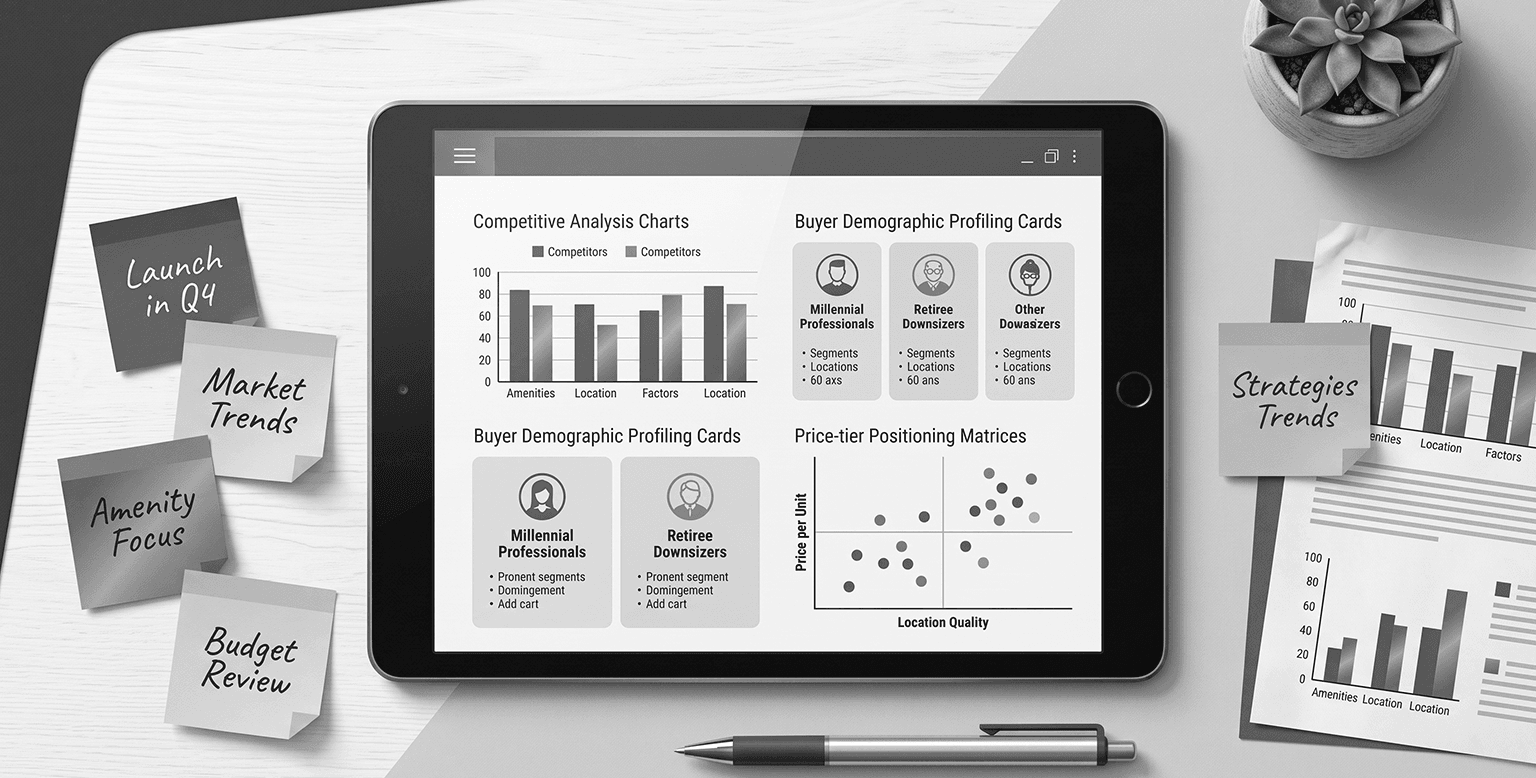
The first marketing investment for a new development should usually be research, not media spend. Before creative is commissioned, the developer needs a clear view of competing projects, buyer profiles, pricing and the positioning of comparable launches in the same corridor.
A practical positioning process should cover:
- Competitive analysis: What are the three closest competing projects promising, and where are they vulnerable?
- Buyer profiling: How much of the opportunity sits with investors versus end-users?
- Price positioning: Does the project’s pricing support the intended market position?
- One-line positioning: What makes the development different, and who is it actually for?
- Project narrative: How do location, design, amenities and lifestyle connect into one coherent story?
That narrative becomes the bridge between strategy and creative. The website, brochure, advertising, sales script and social content should all trace back to the same central proposition.
Skipping this stage is one reason so many launches end up sounding alike, relying on variations of “luxury living” without giving buyers a compelling reason to choose one development over another.
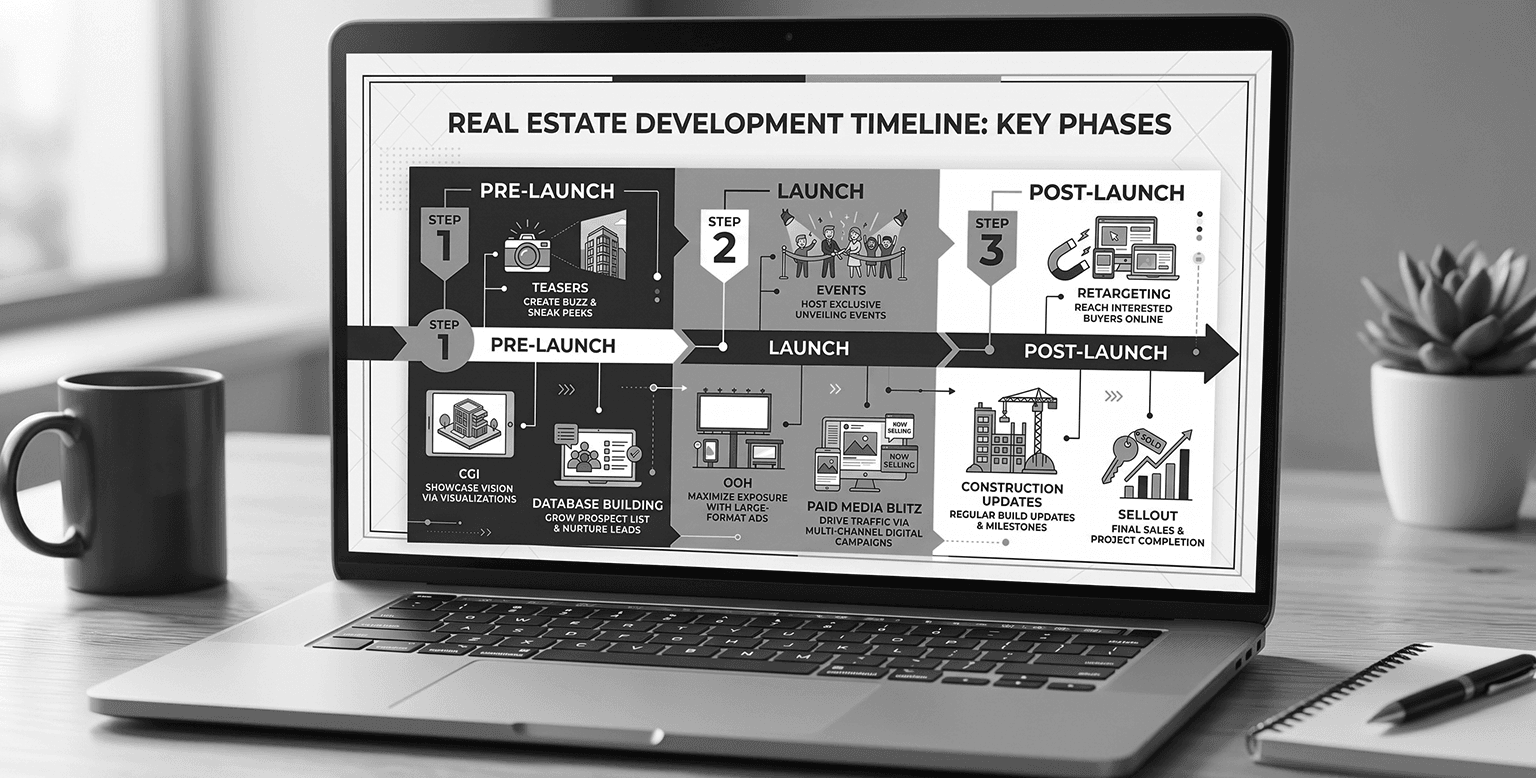
The Property Development Marketing Timeline: Pre-Launch to Sellout
Pre-Launch: Building Demand Before Sales Open
Pre-launch activity is about creating qualified interest before the market sees the full sales proposition.
Developers can use early registrations, landing pages and teaser campaigns to build a database before pricing becomes public. For an unbuilt project, visualisation is equally important. High-quality CGI and virtual tours help buyers understand spaces that do not yet exist and give sales teams something tangible to present.
Branding should also be established before the first unit is listed. Naming, identity and positioning create the foundation for every later communication.
Launch: Concentrating Effort Into a Defined Window
Launch campaigns work best when channels move together rather than operating as isolated activities.
Paid media across Google, Meta and property portals can be timed around the launch date, supported by a physical or hybrid event marketing agency programme. OOH placements across major corridors, malls and high-traffic locations can build market-wide visibility during the same period.
Availability messaging can then introduce a stronger sense of market proof. Updates such as “60% sold in phase one”, when accurate and properly substantiated, can reduce hesitation by showing that buyers are already committing.
Plan Your Project Launch Campaign
Post-Launch: Sustaining Momentum to Sellout
The launch is a peak, not the entire campaign.
Retargeting, email nurture and construction-progress content keep remaining inventory visible after the initial attention fades. PR can add credibility and maintain the project in market conversation, while remarketing and lookalike audiences allow targeting to become more precise as the pool of likely buyers narrows.
The emphasis gradually shifts from broad awareness to conversion efficiency.
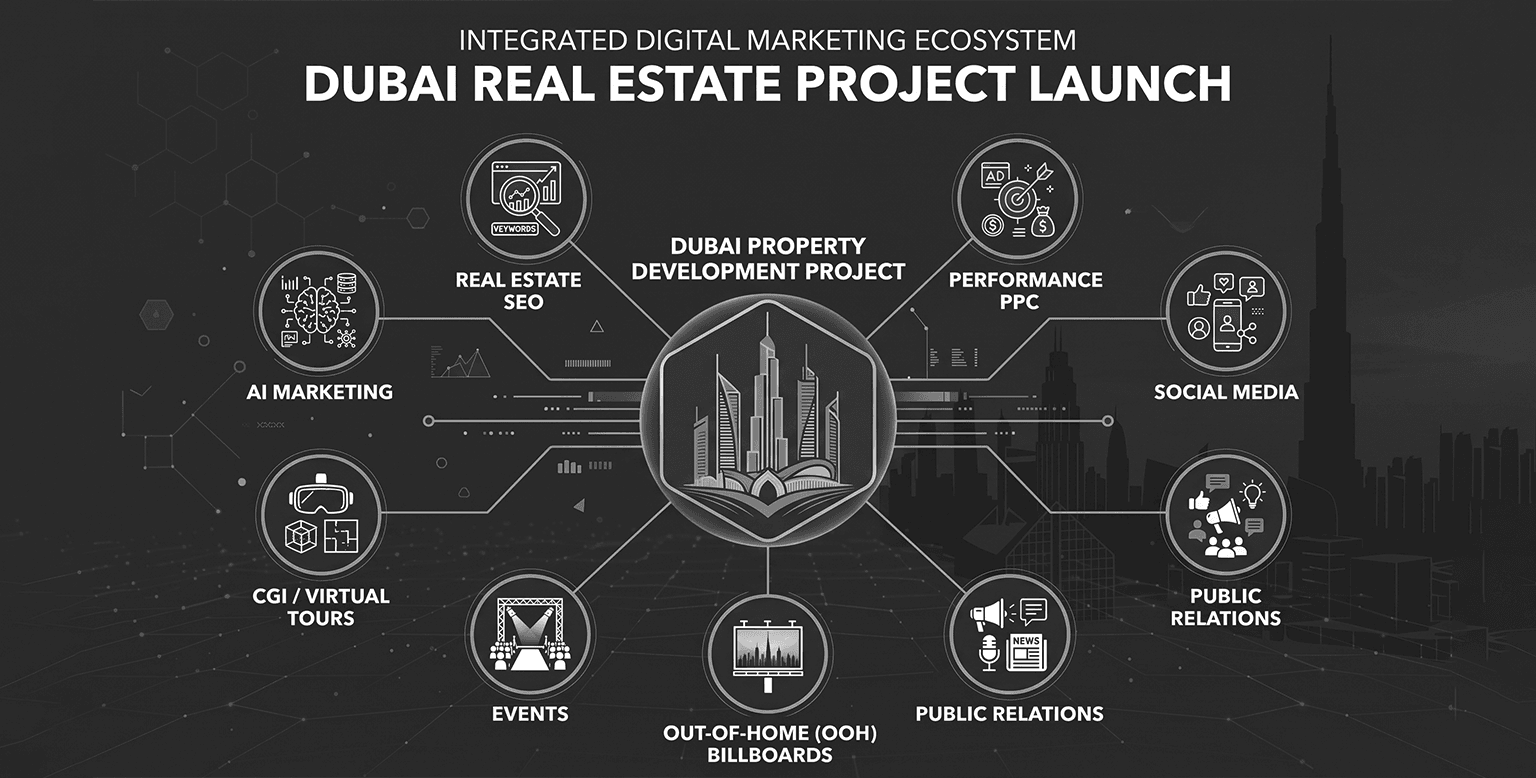
Core Channels for Property Development Marketing
| Channel | Best Used For | Typical Stage |
|---|---|---|
| Real Estate SEO & Content | Organic demand and long sales cycles | Pre-launch through Sellout |
| Performance Marketing / PPC | Fast, measurable lead volume | Launch |
| Social Media Marketing | Community-building and visual storytelling | Pre-launch through Post-launch |
| Real Estate PR | Credibility and earned media | Pre-launch through Post-launch |
| OOH Advertising | Mass local awareness | Launch |
| Event Marketing | High-intent conversion moments | Launch |
| CGI & Virtual Tours | Visualising an unbuilt asset | Pre-launch |
| AI-driven Marketing | Targeting, personalisation and lead qualification | All stages |
Swipe sideways to see the whole table →
A developer rarely wins by choosing one channel and ignoring the rest. Mint & Co. brings the full marketing function together under one roof, with each discipline supporting a different part of the property development journey.
As a real estate SEO agency, we build search visibility around the project and its target audience. Our work as a real estate social media marketing agency keeps the brand and project narrative consistent across social channels. Through our role as a performance marketing agency for real estate, we then connect that visibility with measurable lead generation and campaign performance.
The channels may serve different purposes, but they work as one strategy, with the same positioning, messaging and commercial goals guiding the campaign from launch to sales.
Building a High-Converting Development Website
The project website should be the hub that every other channel points towards. It needs to convert interest, not simply display attractive imagery. With a significant share of developer traffic arriving through mobile devices, mobile-first design is essential.
Essential Website Components
A strong development website should include:
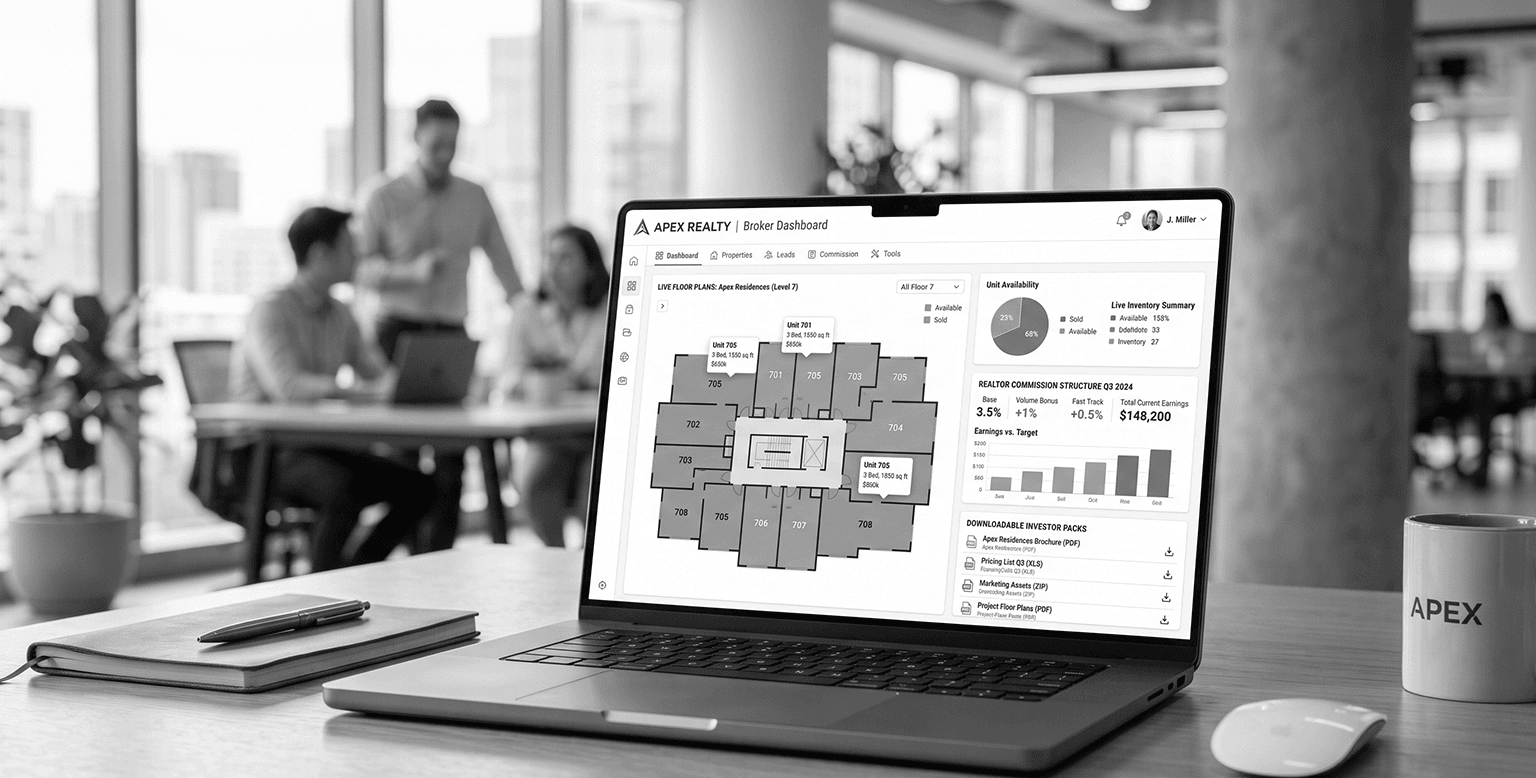
- An interactive floor-plan visualiser with current unit availability rather than a static PDF.
- A gated investor pack covering payment plans, projected returns and delivery timelines.
- A dedicated br
- oker area where partners can access inventory and commission information.
- Fast-loading CGI and virtual-tour content.
- One clear primary action on each page, such as registering interest, booking a viewing or downloading the investor pack.
The website should also make project information easy to verify. Buyers should not have to hunt for basic details that influence a major financial decision.
Building the Broker & Channel Partner Engine
For most off-plan developers in the UAE, brokers remain a critical route to market. Treating them as an afterthought leaves a major part of the sales engine under-supported.
Broker enablement should include competitive co-op structures, current inventory, commission visibility and launch training.
The broker network is also its own audience. It needs dedicated sales collateral, WhatsApp communication groups, briefings and, for larger launches, broker events separate from consumer-facing campaigns.
Good property developer marketing recognises that the person selling the project needs almost as much clarity as the person buying it.
Branding a Development Before the First Unit Sells
Every major development needs an identity of its own. The parent developer may provide credibility, but the project still needs a name, visual language and positioning line that sales teams can use consistently.
Strong branding can also reduce perceived risk around an unbuilt asset. A coherent identity carried through the sales gallery, website, brochure, advertising and launch environment creates a sense of continuity and professionalism.
A real estate branding agency can help translate the commercial positioning into a visual system that remains consistent throughout the sales cycle.
Build Your Project's Brand Identity

Investor Marketing and Presentations
Investor marketing requires a different conversation from lifestyle-led consumer advertising.
Institutional and high-net-worth investors may need a formal presentation covering projected yields, exit scenarios, delivery history, payment structures and the developer’s track record.
Investor roadshows and closed-door briefings can be particularly relevant for larger commitments, sometimes involving placement agents, private banks or other professional networks. Corporate partnerships and relocation companies can also provide a secondary route to qualified end-users and investors.
This workstream should run alongside, not instead of, the wider pre-launch, launch and post-launch programme.
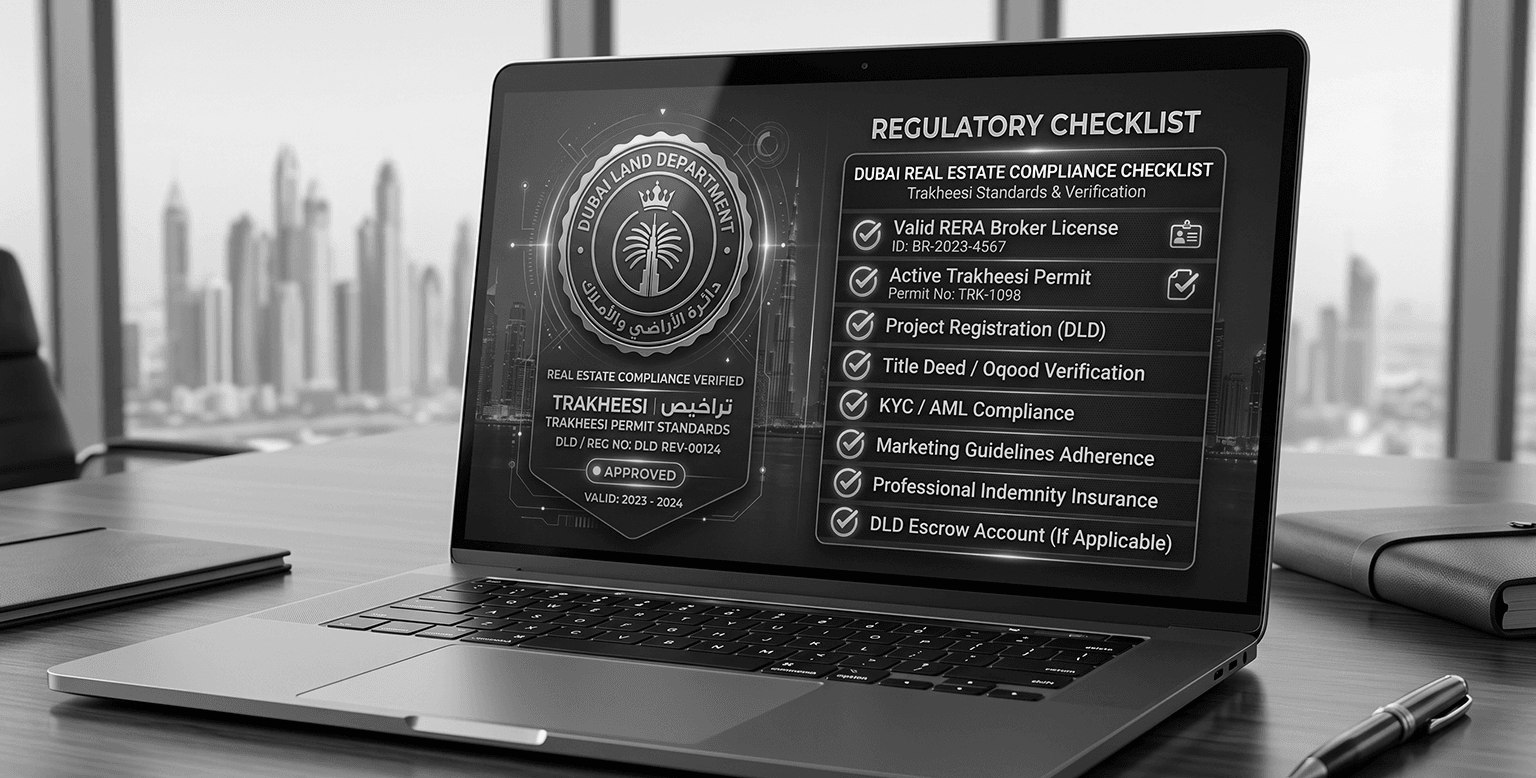
Marketing in the UAE: Trakheesi, RERA and Compliance Essentials
Compliance needs to be built into the campaign from the beginning. In Dubai, real estate advertisements and promotional campaigns require the relevant permit through the Dubai Land Department’s Trakheesi system, with the DLD’s permit service covering electronic, print, outdoor, billboard, promotional and project-launch advertising among other formats.
Developers also need to ensure that project information, pricing, availability and off-plan claims accurately reflect the property’s regulatory and registration status. DLD states that real estate development license holders must obtain an official Trakheesi permit to market a project.
The scale of the issue is significant. Off-plan property accounted for around 70% of Dubai’s total transactions and transaction value in Q1 2026, according to reporting based on market data, underlining how central compliant off-plan marketing is to the city’s development market.
Compliance should therefore sit inside the launch calendar, not at the end of it.
Common Mistakes in Real Estate Developer Marketing
A few common mistakes can quietly weaken even a well-planned real estate marketing strategy. Here are the ones developers should watch for.
- Starting paid media too early: Launching before the database, positioning and visual assets are ready wastes the most concentrated period of attention.
- Treating brokers as secondary: A broker without current information, collateral or clear incentives is harder to activate.
- Using one message for everyone: Investors, end-users and brokers need different reasons to engage.
- Stopping after launch week: Without sustained content, PR and remarketing, visibility can fall sharply.
- Ignoring compliance: An invalid permit or inconsistent project information can create unnecessary regulatory and reputational exposure.
- Measuring only leads: Lead volume says little about whether those enquiries become reservations and contracts.
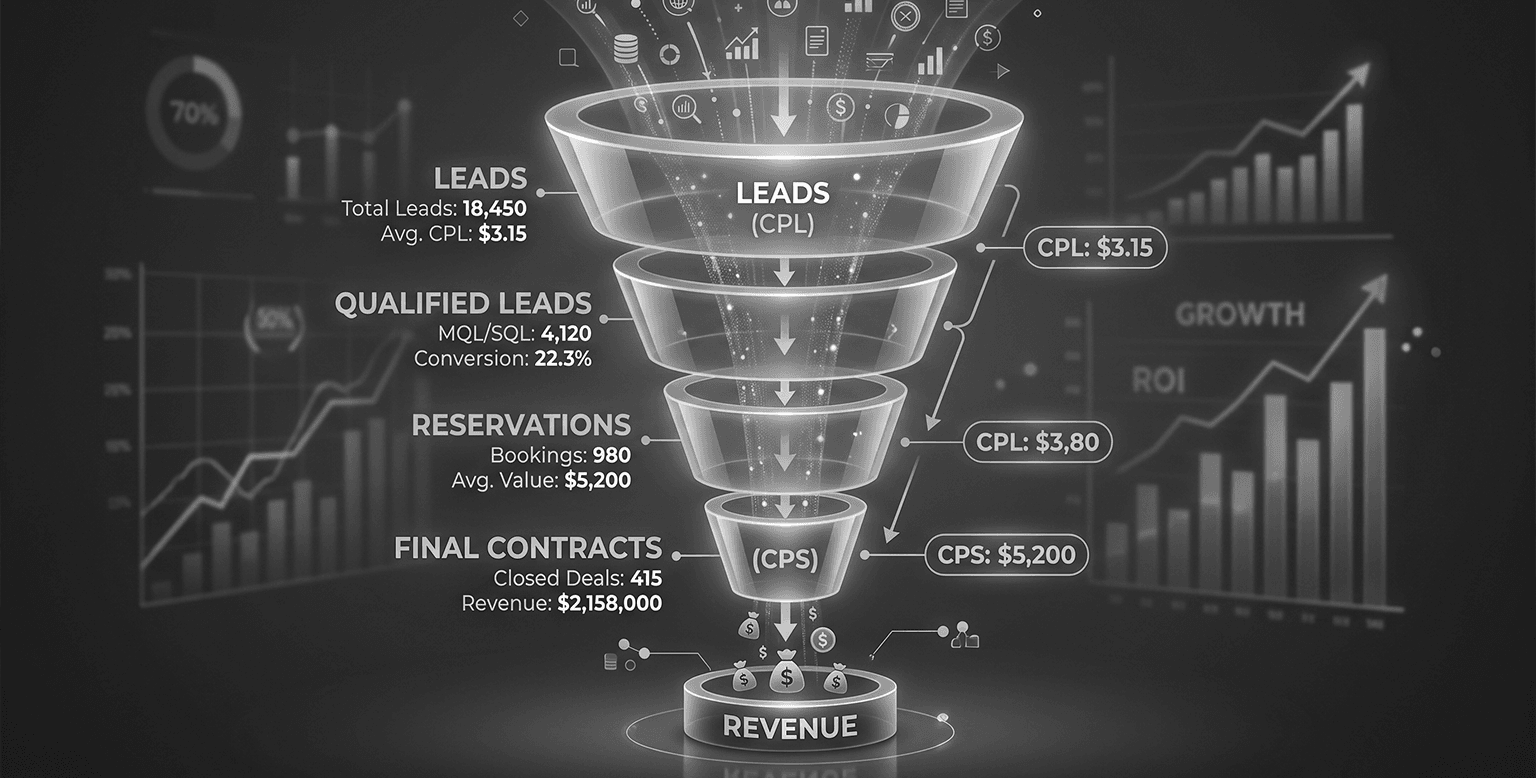
Measuring Developer Marketing ROI: Track the Full Funnel
A serious marketing programme for real estate development needs to follow the buyer beyond the initial registration.
| Metric | What It Tells You |
|---|---|
| Cost Per Lead (CPL) | Top-of-funnel efficiency by channel |
| Cost Per Qualified Lead | Whether registrations have genuine purchase potential |
| Cost Per Sale (CPS) | The number that ultimately matters to the P&L |
| Sales Velocity vs Target | Whether the project is tracking towards its sellout plan |
| Broker-Sourced Conversion Rate | Whether broker interest is becoming actual business |
| Website Engagement | Whether floor-plan views, tours and investor-pack downloads indicate meaningful intent |
A cheap lead is not necessarily a cheap acquisition. If one channel generates fewer but substantially better-qualified buyers, its economics may be stronger despite a higher CPL.
During launch, channel-level performance should be reviewed weekly. Through post-launch, a monthly full-funnel review gives teams enough perspective to move budget towards what is actually converting. Thus, effective marketing for real estate development connects the project’s positioning, audience and sales strategy from launch through delivery.
How Mint & Co. Helps Property Developers Market Smarter
Mint & Co. is a Dubai-based agency built around the full development marketing journey, bringing branding, SEO, performance media, social, PR, OOH, events, CGI and AI-driven marketing into one connected programme.
The advantage is continuity. The project does not have to develop one story for branding, another for advertising and another for PR. The same positioning can carry from the first CGI render through launch and into the final stages of sellout.
Talk to Our Property Development Marketing Team
Trends to Watch in Property Development Marketing (2026)
In 2026, real estate marketing for developers is becoming more data-led, more personalised and increasingly visual. AI is moving beyond content generation into website personalisation, chat-based lead qualification and faster response to buyer intent.
Key shifts include:
- AI-driven personalisation and chat-based qualification capabilities through AI marketing agencies in Dubai.
- Greater use of CGI, virtual tours and digital twins before physical show units are available.
- More flexible media allocation, with budgets shifting during campaigns based on cost per qualified lead rather than fixed channel percentages.
- Greater integration of search, CRM and behavioural data to understand where demand is coming from.
For a broader view, the guide to AI in real estate marketing explores how these technologies are changing property campaigns.
Mint & Co. builds and runs developer marketing programmes across Dubai and the wider UAE, from the first CGI render to the final sold-out unit.
Got Questions? We've Got You.
What is real estate developer marketing?
Real estate developer marketing is the promotion of a development from pre-launch through sell-out, covering positioning, branding, demand generation, broker engagement, sales enablement and ongoing market visibility.
How is real estate developer marketing different from real estate agent marketing?
Agent marketing usually promotes a specific available property. Developer marketing supports an entire project, often before completion, and has to balance investors, end-users, brokers, inventory and a longer sales cycle.
How much should a property developer budget for marketing a project?
There is no universal figure. The budget depends on project value, location, inventory, competitive intensity, sales timeline and the balance between brand-building, paid acquisition, broker activity and other channels.
When should a developer start marketing a new project?
Ideally, marketing begins before the formal launch. Research, positioning, branding, CGI, database building and broker preparation can create demand before sales open.
What role do brokers play in property development marketing?
Brokers are a major distribution channel for off-plan projects. Giving them accurate inventory, strong collateral, clear commission structures and timely launch information can directly support sales velocity.
Do developers need a Trakheesi permit to advertise a project in Dubai?
Dubai’s DLD requires the relevant real estate advertising permit through Trakheesi for real estate advertisements and promotional activities. Developers should confirm the applicable permit and advertising requirements for each campaign format.
Which marketing channels work best for an off-plan launch?
The answer depends on the project, but a coordinated mix of paid media, property portals, SEO, social, PR, CGI, events, OOH and broker marketing generally serves different stages of the buyer journey.
How is AI changing real estate developer marketing?
AI is increasingly being used for audience segmentation, personalisation, chat-based qualification, content workflows and media optimisation. Its strongest value comes when it improves decisions and responsiveness rather than simply increasing content volume.
How should developers measure marketing ROI beyond lead volume?
Track qualified leads, cost per sale, sales velocity, broker conversion and meaningful website behaviour alongside CPL. The objective is to connect marketing activity to reservations and signed contracts.
What is the difference between marketing to investors and marketing to end-users?
Investors typically need stronger financial and commercial information, including yield, payment structure and exit considerations. End-users are more likely to respond to location, design, amenities and lifestyle. Both audiences can sit within one campaign, but they should not receive identical messaging.
Tags: Get Leads, leads, Real Estate
Related articles
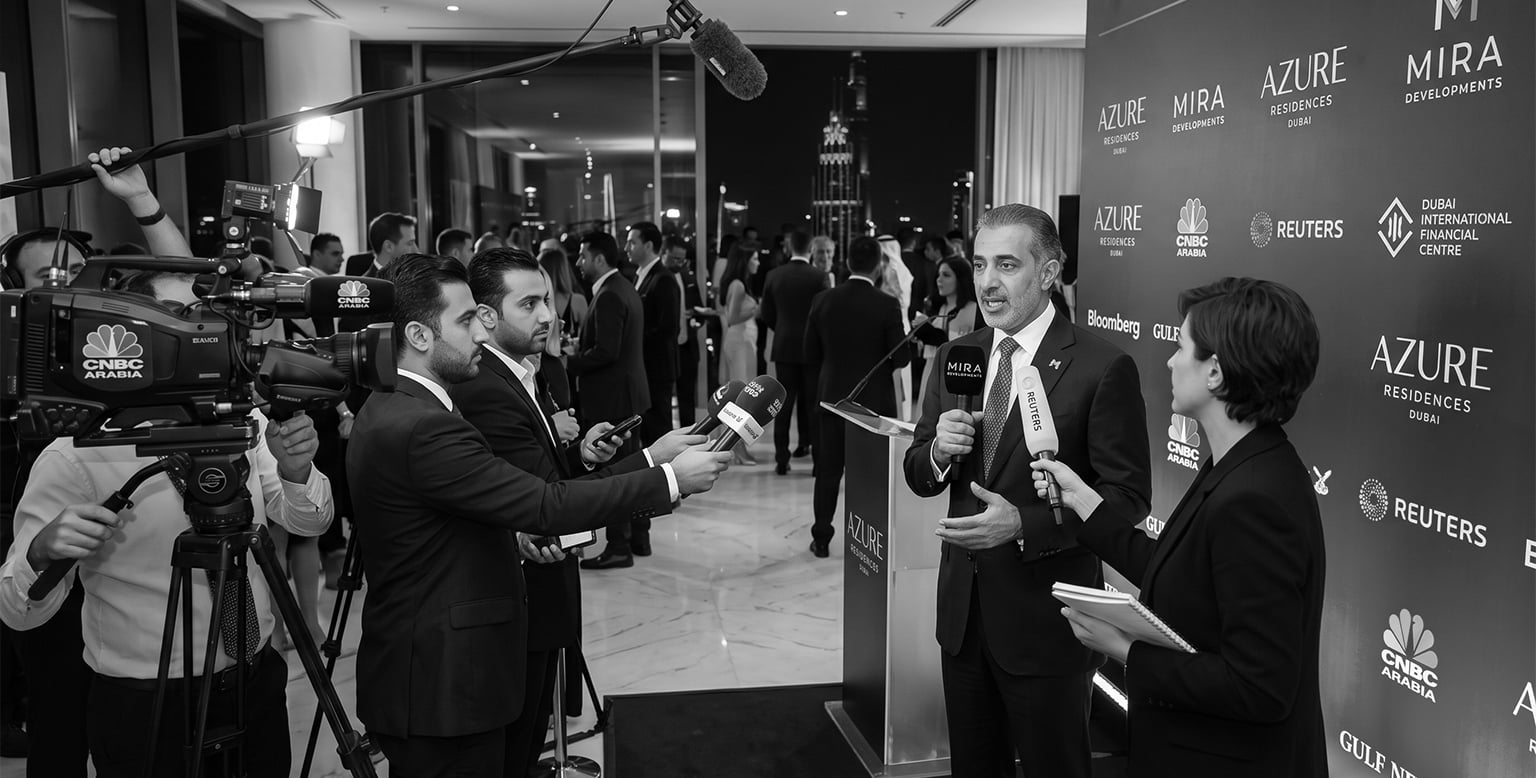
Real Estate Development PR: How Developers Launch Projects
Blogs, Real Estate
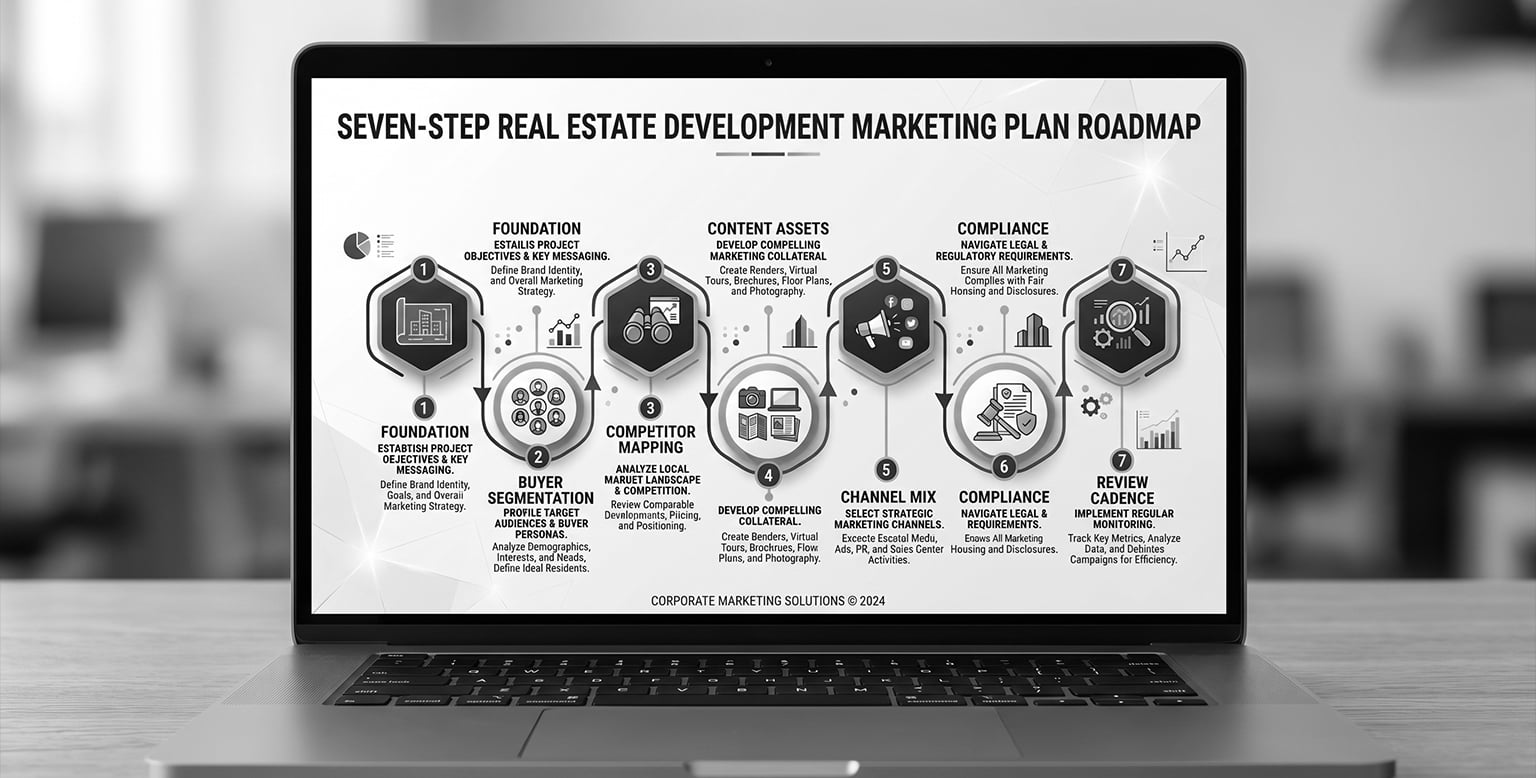
How to Build a Real Estate Development Marketing Plan
Blogs, Real Estate
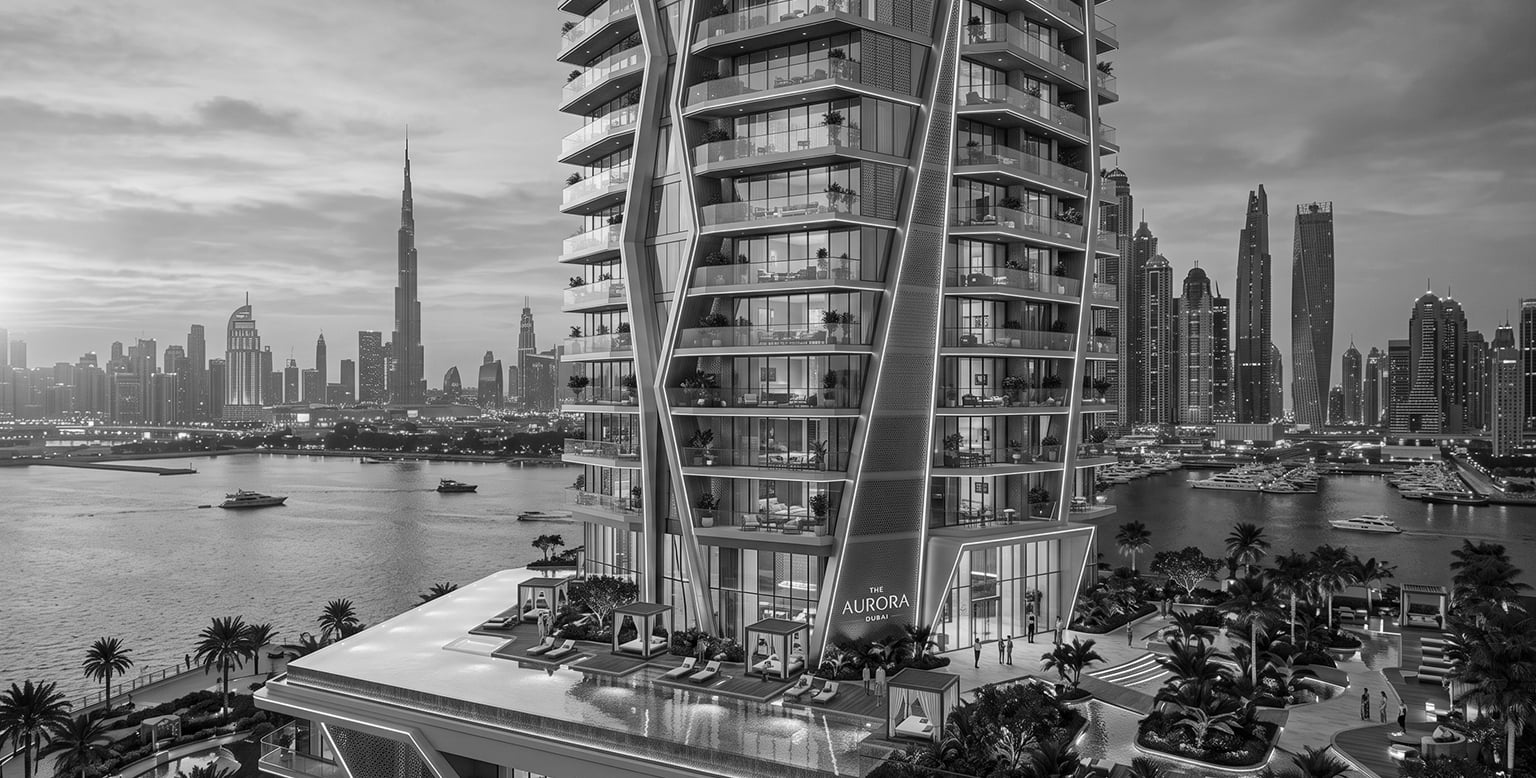
10 Real Estate Development Marketing Strategies (2026)
Blogs, Real Estate
RERA Advertising Rules 2026: Developer Compliance
Blogs, Real Estate
Trakheesi Permit: Clear It Before Your Dubai Campaign
Blogs, Real Estate
AI vs Traditional Marketing for Dubai Real Estate
Blogs, Real Estate