10 Real Estate Development Marketing Strategies (2026)
Blogs, Real Estate
- Author: Rahul Shivaprakash
Digital marketing for property developers succeeds or fails on a handful of specific, executable tactics not on marketing spend alone. The most effective marketing strategies for real estate developers connect brand, demand generation, sales and follow-up instead of treating each channel as a separate campaign.
Developers are often told to “do everything”, but budgets are finite. The real question is what deserves attention first, what can wait, and what actually helps move units.
The 10 strategies below are ordered roughly from foundational the work to do before anything else to amplifying tactics that become more effective once the foundation is in place. The focus is practical: what to build, where to spend, and how to turn attention into qualified demand and ultimately sales.
1. Build a Distinct Project Brand Before the First Unit Lists
A project should have a recognisable identity before the first serious media spend begins. Every other channel performs better when buyers know what the development stands for, who it is for and why it is different from the developer’s other projects.
A strong project brand can also support pricing. Industry brand-experience research suggests that a well-perceived real estate brand can command a premium of roughly 10–15% over comparably specified but poorly branded competitors.
The point is not to make the project look expensive for the sake of it. The identity needs to make the proposition easier to understand and remember.
- Give the development its own name and identity rather than simply extending the parent developer’s corporate brand.
- Build a visual language that belongs to the project. Reusing the developer’s corporate palette and templates rarely creates enough distinction.
- Define one clear positioning line that the sales team, brochure, website, sales gallery and advertising all repeat consistently.
- Make the brand reflect the actual buyer: end-user, investor, family, luxury buyer or a more specific segment.
- Work with a real estate branding agency that understands how identity needs to translate into sales materials, digital campaigns and the physical sales experience.
- Treat this as a core marketing strategy for real estate development, not a cosmetic exercise.
2. Invest in Cinematic CGI, Renders and Virtual Tours
For an off-plan project, visualisation is not decoration. It is the product experience before the product exists. Buyers need to understand the apartment, the proportions, the views, the amenities and eventually the feeling of living there without being able to walk through the finished building.
That makes CGI and virtual tours one of the highest-leverage visual investments in an off-plan campaign.
Research found that listings with 3D tours sold up to 31% faster in one study of more than 143,000 listings. NAR’s 2025 buyer research also found that 41% of internet-using buyers rated virtual tours as “very useful” during their property search. Research has also associated dynamic visual content with substantially higher inquiry volumes, while current NAR guidance continues to emphasise photos, video, virtual tours and floor plans as important online listing assets.
For developers, the practical brief should include:
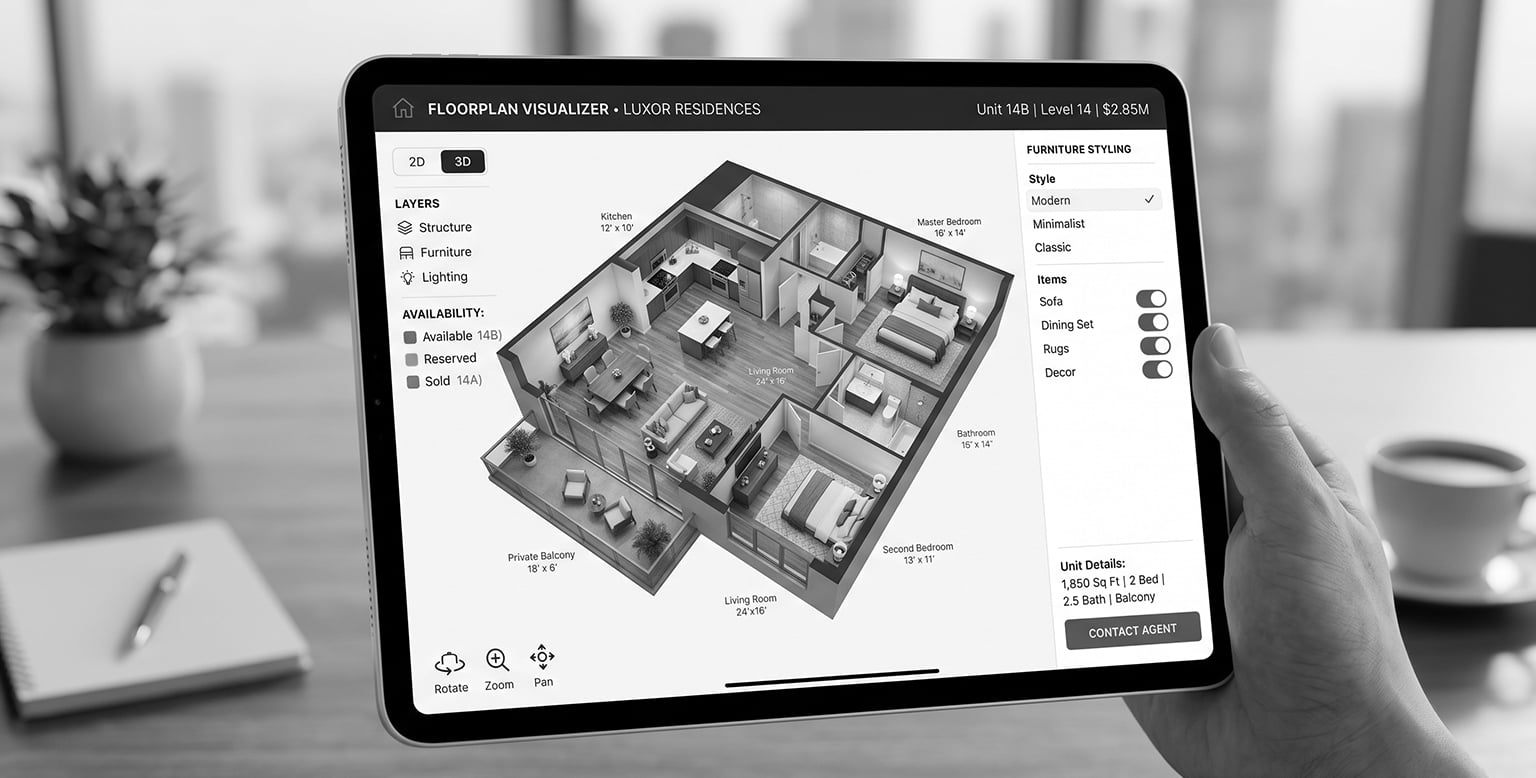
- An interactive floor-plan visualiser that lets prospects understand layouts and unit differences.
- A walkthrough-style CGI film for the hero unit type, rather than a generic tower animation.
- High-quality interior renders that show materials, lighting and scale without overpromising.
- Drone footage of the actual site, roads, skyline and surrounding neighbourhood.
- CGI virtual tours that allow an overseas buyer to explore the project before travelling to Dubai.
- Shorter visual cuts for paid social, landing pages and WhatsApp follow-up.
The best CGI virtual tours are not isolated assets. They feed the website, sales gallery, social channels, performance campaigns and broker presentations.
3. Win Local and AI-Powered Search With Real Estate SEO
Most property journeys now begin with online research, often well before a buyer speaks to a salesperson. That makes organic visibility a compounding asset. A project that owns its name, location and category searches can continue attracting relevant demand long after an individual paid campaign ends.
A strong real estate development digital marketing strategy therefore needs two search layers.
- Build a fast, technically sound project website that can rank for the project name, location, unit types and high-intent searches.
- Create useful pages around questions buyers actually ask: payment plans, handover dates, amenities, service charges, floor plans, investment potential and area comparisons.
- Build location content that gives the project context instead of filling pages with generic Dubai property copy.
- Optimise project information so search engines can understand facts clearly and consistently.
- Structure important information in ways that can also be understood by AI search and large language models.
- Use an experienced real estate SEO agency to connect technical SEO, content and commercial intent.
AI search is becoming another discovery layer. Buyers increasingly ask conversational systems about properties, neighbourhoods, developers and investment options. Clear, factual and well-structured project information gives those systems something reliable to understand and potentially cite.
That makes SEO part of residential developer digital marketing, rather than a separate technical exercise.
4. Run Targeted Performance Marketing and Retargeting Campaigns
Paid media is still the fastest way to create measurable lead volume, but broad targeting can burn through a development budget quickly. A campaign aimed at “Dubai property buyers” is rarely precise enough.
The better approach is to build campaigns around the actual audience, unit type, location, price point and buying motivation.
- Use paid search for high-intent queries where the prospect is already looking for a property or location.
- Use paid social media to introduce the project to defined investor and end-user audiences.
- Build separate creative and landing pages for different buyer groups rather than sending everyone to the same generic page.
- Target overseas markets based on actual buyer activity. In early 2026, Indian buyers accounted for an estimated 20.6% of Dubai property purchasing activity, followed by British buyers at 13.3% and Egyptian buyers at 12.6%, according to Harbor Real Estate data cited by DXBinteract and reported by Khaleej Times.
- Build retargeting audiences from website visitors, brochure downloads, floor-plan visualiser users and previous enquiries.
- Connect campaign data to the CRM so qualified leads can be separated from low-intent registrations.
Those warm audiences are particularly valuable because the prospect has already shown interest. Retargeting should therefore be treated as a core part of digital marketing for real estate developers, not an afterthought.
A specialist performance marketing agency for real estate can also test creative, audience and landing-page combinations continuously rather than waiting until the end of the campaign to assess what worked.
5. Make Social Media a Daily Sales Engine, Not a Brochure Feed
Social media works better for developers when it behaves like a daily content engine rather than a digital brochure.
People want to see the project taking shape. They want to understand the neighbourhood, meet the architect, see an amenity revealed and watch construction progress. That creates a much richer relationship with the development than posting the same hero render every few weeks.
- Use Instagram and TikTok for visual storytelling, short-form video, construction progress and amenity reveals.
- Use LinkedIn for investor-facing updates, development milestones, leadership commentary and broker communication.
- Use WhatsApp broadcasts for time-sensitive launches, unit releases, event invitations and warm-lead follow-up.
- Work with credible property creators who can walk through the project, explain the location or discuss the investment proposition in their own voice.
- Repurpose strong content across paid media, email, WhatsApp and broker communications.
- Keep the content tied to the project’s positioning rather than chasing every social trend.
A real estate social media marketing agency should be building a content system around the development, not simply producing monthly posts.
Plan Your Project's Social Content Calendar

6. Turn Your Broker Network Into a Marketing Channel
For many UAE developers, brokers are central to off-plan sales. That means broker enablement is not simply a sales-operations task. It is part of the marketing strategy.
A broker who has the right material can present a project accurately, quickly and consistently. A broker waiting two days for a floor plan or approved caption is far less useful to a launch campaign.
- Build a co-branded broker toolkit before launch.
- Provide approved social captions that brokers can publish immediately.
- Give brokers clean floor-plan graphics, unit comparisons and key project facts.
- Create a one-page investor summary that can be sent directly to prospects.
- Provide short CGI videos that brokers can share on WhatsApp.
- Introduce simple incentive layers, such as leaderboard visibility or bonus co-op tiers, around qualified site visits and meaningful conversions rather than registrations alone.
- Keep all sales material version-controlled so brokers are never circulating outdated pricing or project information.
The wider development of a real estate marketing plan should therefore include brokers from the beginning rather than adding them after the campaign is live.
7. Host a Launch Event That Creates Its Own Buzz
A good launch event does two jobs at once. It creates a concentrated conversion opportunity for the existing database and produces weeks of content, PR and social material afterwards.
The strongest format is often hybrid: an in-person experience for VIP brokers, investors and high-value leads, supported by a livestream or digital experience for the wider database.
- Design the event around the project story rather than filling the room with generic entertainment.
- Use the sales gallery, model, CGI and interactive screens to let visitors experience the development.
- Invite priority brokers and high-intent prospects rather than focusing only on attendance numbers.
- Livestream the key reveal for prospects who cannot attend.
- Build at least one genuinely shareable moment into the event a reveal, installation, architectural feature or strong photo opportunity.
- Capture professional footage that can become weeks of social content and PR material.
A specialist event marketing agency can turn the launch into a content-producing moment rather than a one-night expense.
For developers looking at generating buzz around a project launch, the event should be planned alongside PR and social content from the start.
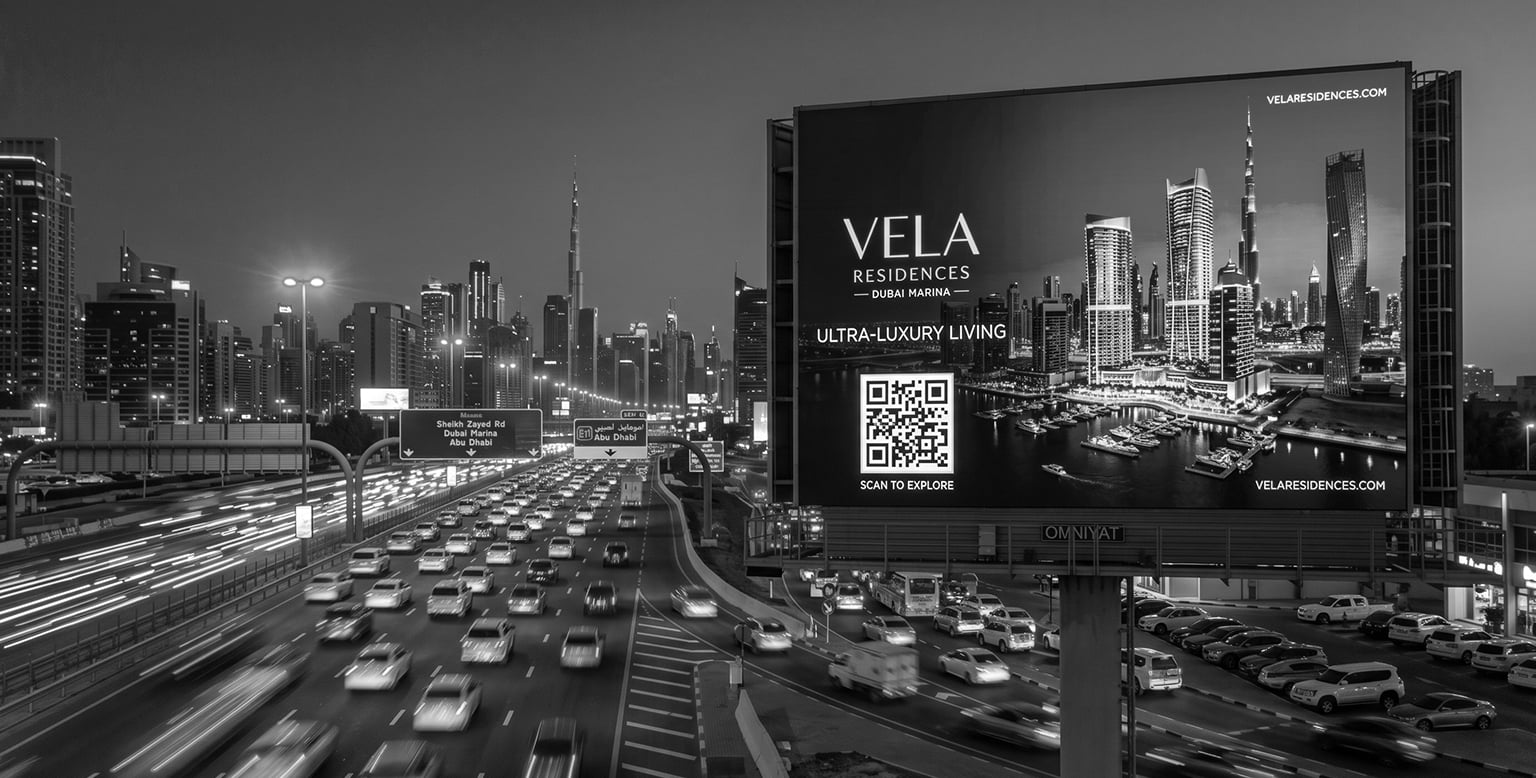
8. Put OOH Where Buyers Actually Are, Not Just Where It Is Cheap
Out-of-home advertising still has a role in Dubai property marketing, particularly when the development needs strong local visibility during a launch.
The mistake is choosing locations because they are available rather than because they intersect with the buyer journey.
- Use major road corridors that align with the target audience and project location.
- Consider mall takeovers where the target demographic actually spends time.
- Use airport and arrivals advertising for launches with a strong overseas-investor audience.
- Consider competing-project corridors where buyers are already visiting sales galleries.
- Keep creative simple enough to understand at a glance.
- Add a trackable QR code linking to the project landing page, floor-plan visualiser or enquiry form.
This makes OOH advertising in Dubai more measurable without pretending that every outdoor impression can be attributed directly to a sale.
The role of OOH is usually awareness and recall. Its value increases when the digital campaign behind it gives that awareness somewhere to go.
9. Earn Credibility With Real Estate PR
Paid advertising tells people what the developer wants them to know. PR gives the project a chance to be discussed by someone else.
That distinction matters in property, where buyers are often evaluating the developer as much as the apartment. A project appearing in respected property or business media can carry a different kind of credibility from a paid placement.
The PR strategy should therefore go beyond sending a launch release.
- Find a genuine story in the project’s design, architecture or sustainability features.
- Use construction milestones as opportunities for coverage.
- Develop data-led stories around the neighbourhood, infrastructure or changing buyer demand.
- Position senior leadership as informed sources on market trends.
- Give journalists useful commentary rather than approaching every conversation as a sales pitch.
- Continue the relationship after launch so the developer has something worth talking about beyond the original announcement.
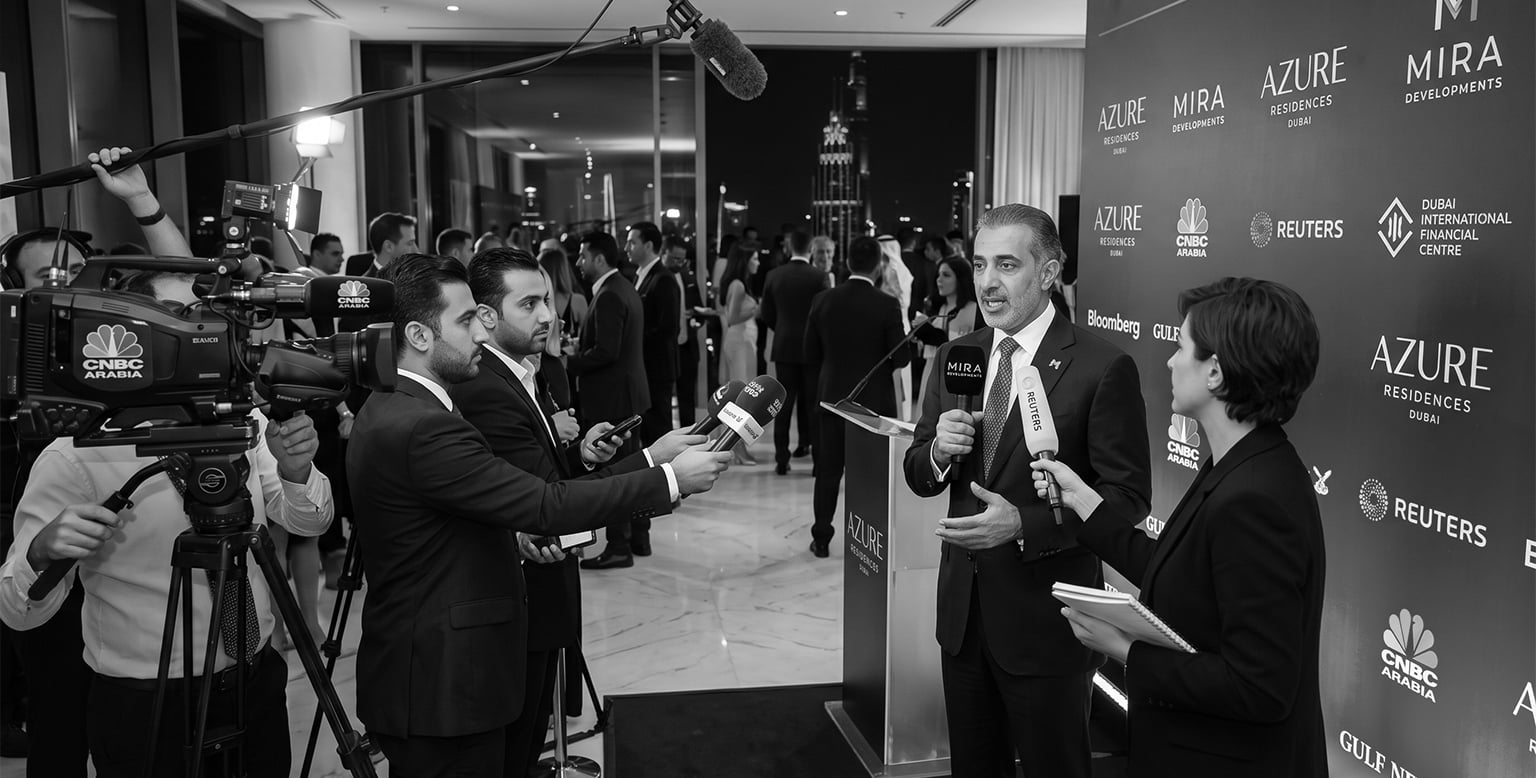
A real estate PR agency should help turn the developer and its leadership into credible voices, not simply generate a spike in launch coverage.
Talk to Our Real Estate PR Team
10. Use AI to Personalize and Speed Up Lead Follow-Up
The final strategy is where the earlier nine begin to compound.
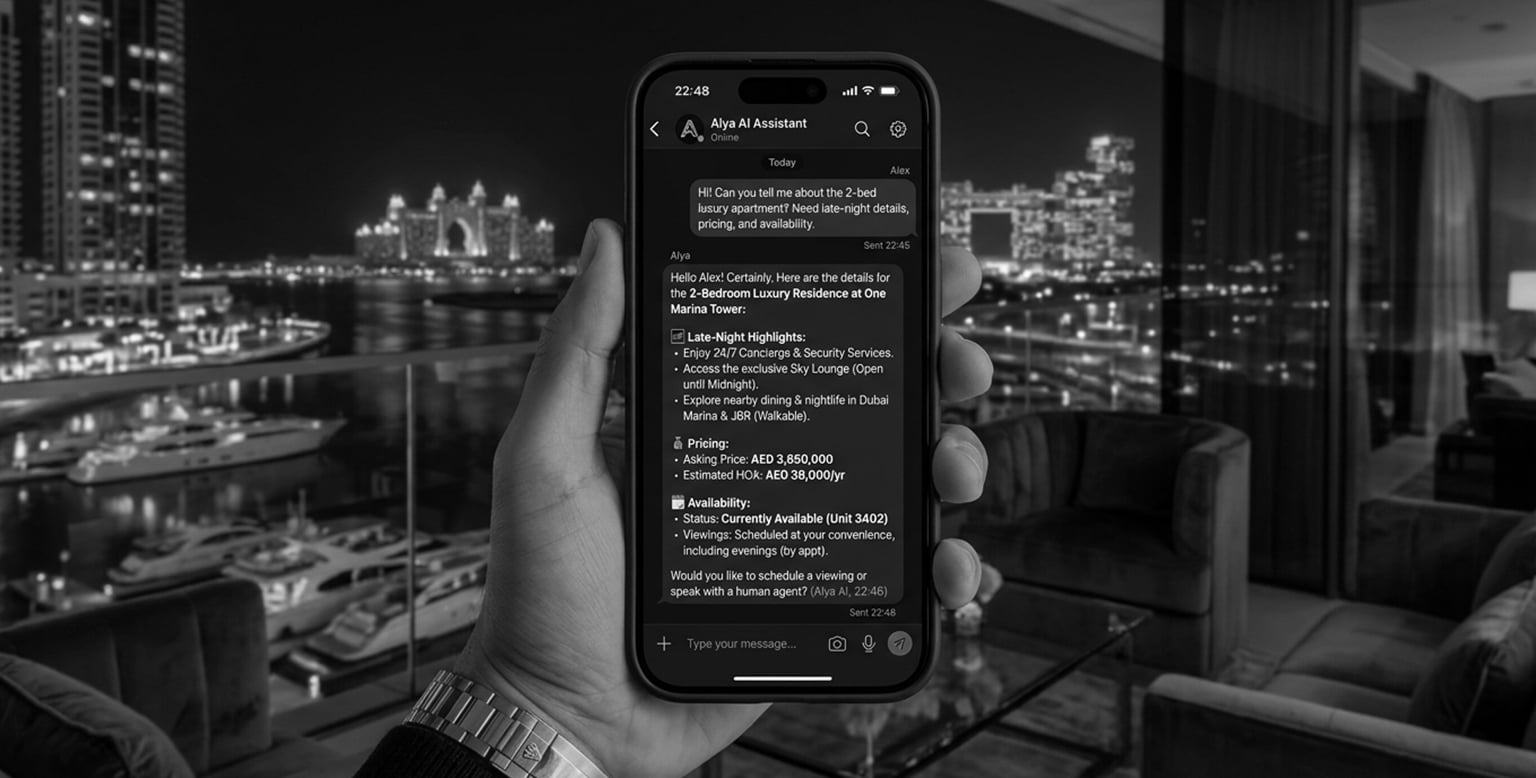
AI can help developers reduce the gap between someone showing interest and someone from sales actually engaging with them. A visitor who asks about a two-bedroom apartment at 11 p.m. should not necessarily have to wait until the following morning to receive a useful response.
- Use a chat-based AI assistant to qualify visitors, answer common project questions and route registrations to the right sales team.
- Personalise website experiences based on what a visitor has already viewed, such as unit types, price ranges or floor plans.
- Use AI to identify patterns in campaign performance and shift budget towards combinations of audience, creative and placement that are converting better.
- Generate variations of ad creative and messaging for different buyer segments while keeping project positioning consistent.
- Use AI to support sales teams with summaries of previous interactions so follow-up starts with context.
- Keep human salespeople involved where the conversation becomes commercially significant.
Modern AI marketing agencies in Dubai are increasingly focused on practical workflow improvements rather than flashy automation.
The broader opportunity is AI in real estate marketing: making the buyer journey more responsive, more relevant and easier for sales teams to manage at scale.
Which Strategy Should a Developer Start With?
| Strategy | Best For | Priority |
|---|---|---|
| 1. Project Branding | Positioning and differentiation | Foundational 1 |
| 2. CGI, Renders & Virtual Tours | Showing an unbuilt asset | Foundational 2 |
| 3. Real Estate SEO | Compounding organic demand | Foundational 3 |
| 4. Performance Marketing | Qualified lead generation | Core 4 |
| 5. Social Media | Daily visibility and engagement | Core 5 |
| 6. Broker Marketing | Distribution and sales reach | Core 6 |
| 7. Launch Events | Concentrated conversion and content | Amplifying 7 |
| 8. OOH Advertising | Local awareness and recall | Amplifying 8 |
| 9. Real Estate PR | Third-party credibility | Core 9 |
| 10. AI Marketing | Personalisation and faster follow-up | Amplifying 10 |
Swipe sideways to see the whole table →
If the budget is limited, fund the Foundational strategies properly before spreading money across everything else. A weak brand, weak visualisation and weak search presence make the channels that follow harder and more expensive to convert.
How Mint & Co. Helps Developers Execute These Strategies
Mint & Co. brings all 10 strategies together under one roof. That means a developer does not have to stitch together a branding studio, CGI house, media buyer, social team, events agency and PR firm and then spend time making sure they are all telling the same story.
The advantage is continuity. The project positioning established during branding can carry into CGI, SEO, paid media, social, broker materials, PR, events and AI-led lead journeys. Each discipline has a different job, but the commercial direction remains the same.
Mint & Co. builds and runs real estate development marketing strategies for developers across Dubai and the wider UAE, from the first project identity through to the final signed contract.
Talk to Our Property Development Marketing Team
Got Questions? We've Got You.
What is digital marketing for property developers?
Digital marketing for property developers covers the digital channels used to attract, qualify and convert buyers, including SEO, paid media, social media, content, websites, virtual tours, CRM and AI-led follow-up. For a development, the strongest approach connects these channels to the project’s positioning and sales process rather than running them independently.
Which real estate development marketing strategy generates leads fastest?
Performance marketing and paid search can generate measurable lead volume quickly because they put the project in front of defined audiences immediately. However, lead volume alone is not the objective. Campaigns need strong creative, landing pages, qualification and sales follow-up to turn registrations into genuine opportunities.
How much should a developer budget across these marketing strategies?
There is no useful universal percentage because budgets vary by project value, inventory, location, launch timeline and target buyer. A sensible approach is to fund the foundational work first brand, visual assets and digital infrastructure before allocating the remaining budget across paid media, social, PR, events and other channels.
Do these strategies work the same way for off-plan and ready properties?
Not entirely. Off-plan developments need more emphasis on CGI, virtual tours, trust-building, project storytelling and broker enablement because the physical product is not yet available. Ready properties can lean more heavily on actual photography, physical visits, immediate availability and location-based conversion.
What are the 4 Ps of real estate marketing?
The traditional 4 Ps are product, price, place and promotion. In real estate, product covers the development itself, price includes the commercial proposition and payment structure, place covers location and distribution, and promotion covers the channels used to communicate the opportunity.
How long before a real estate development marketing strategy shows results?
Paid campaigns can produce enquiries within days, while SEO, brand building, PR and content usually take longer to compound. The sales cycle also matters. A high-value property purchase may require several interactions between the first enquiry and the final decision, so performance should be measured across the full funnel rather than by early lead volume alone.
Which strategy matters most for a Dubai off-plan launch specifically?
The strongest starting combination is a distinct project brand, high-quality visualisation, a conversion-focused website, targeted performance marketing and strong broker enablement. Dubai’s market also has a significant international buyer base, making location-specific digital campaigns and remote buying experiences particularly important.
Can a smaller developer run all 10 strategies at once?
Yes, but not necessarily by running 10 separate campaigns or suppliers. A smaller developer can prioritise the foundational work, then layer in the channels that match its audience and launch stage. Working with one integrated partner can also reduce the coordination burden and keep the project narrative consistent.
Tags: Get Leads, leads, Real Estate
Related articles
Real Estate Development PR: How Developers Launch Projects
Blogs, Real Estate
Real Estate Developer Marketing: The Complete Guide
Blogs, Real Estate
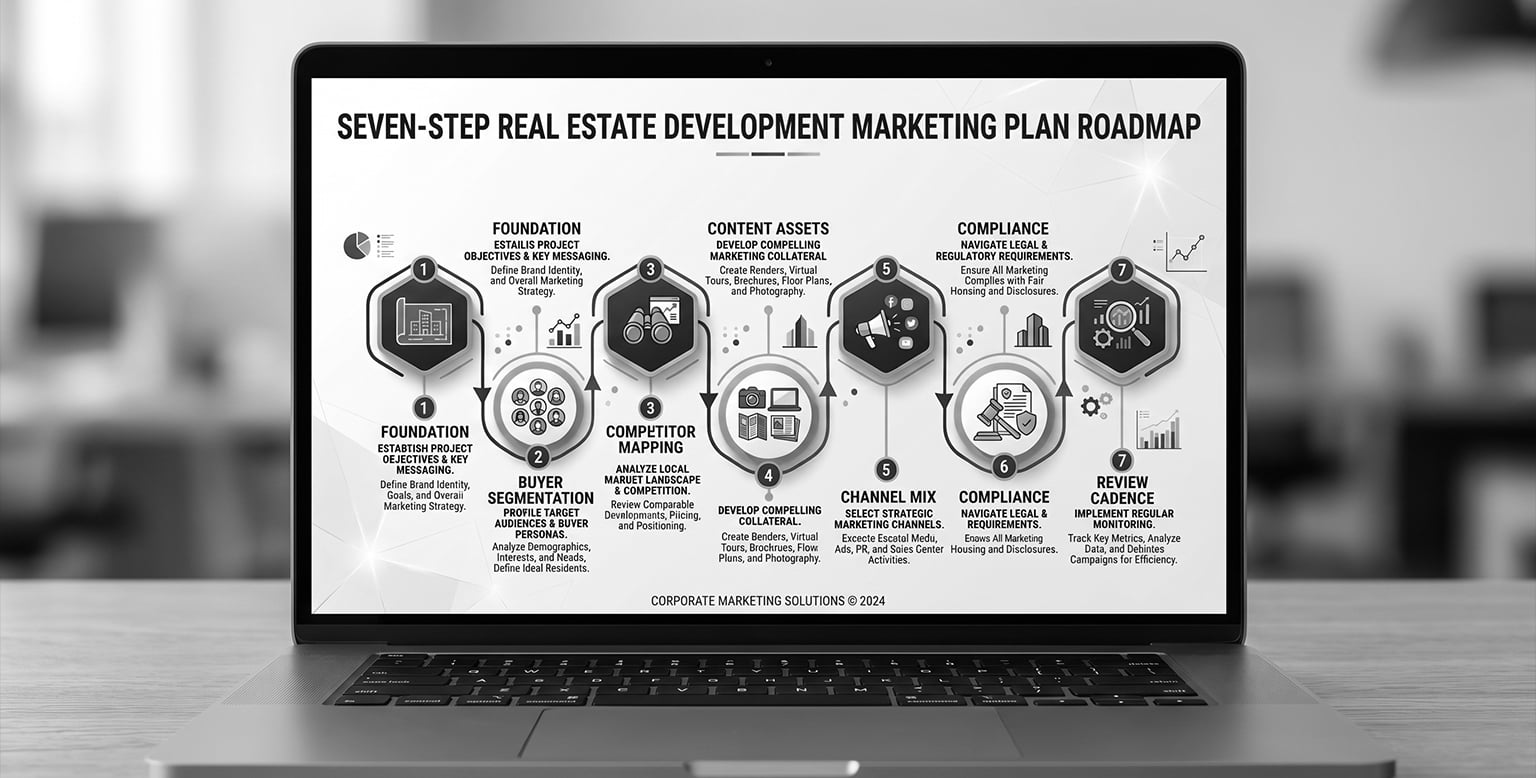
How to Build a Real Estate Development Marketing Plan
Blogs, Real Estate
RERA Advertising Rules 2026: Developer Compliance
Blogs, Real Estate
Trakheesi Permit: Clear It Before Your Dubai Campaign
Blogs, Real Estate
AI vs Traditional Marketing for Dubai Real Estate
Blogs, Real Estate