
How to Do 360 Real Estate Photography: Complete Guide
Blogs, Real Estate
- Author: Rahul Shivaprakash
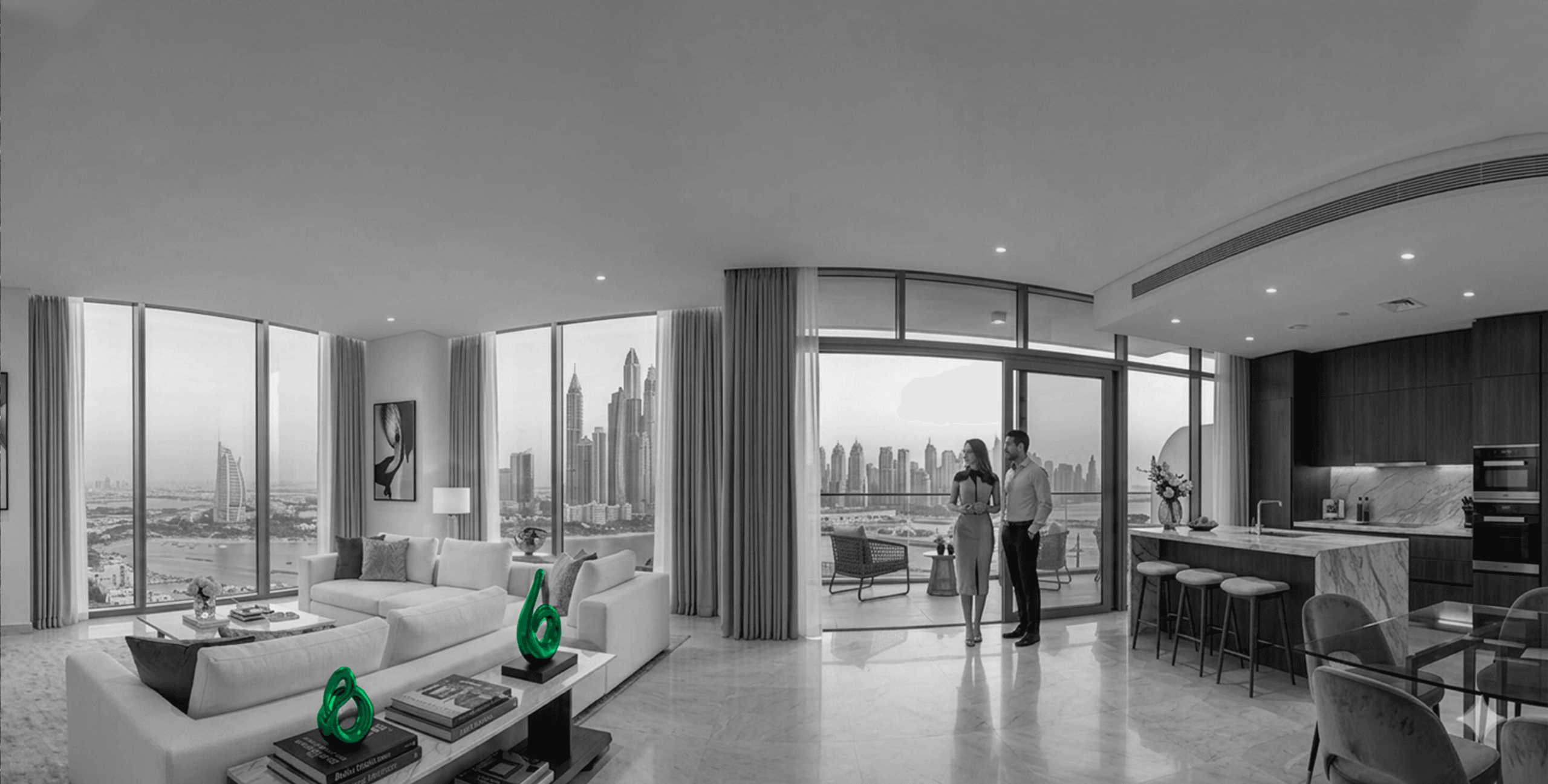
For years, professional photos, floor plans, and the occasional video formed the foundation of property marketing. Today, that is no longer enough.
Today’s buyers expect far more before they ever schedule a viewing. They want to understand how a property feels, not just how it looks. They want to know whether the living room connects naturally to the dining area. They want to see the balcony view. They want context.
This shift is particularly noticeable in the UAE. Whether it’s a luxury villa in Dubai Hills, an off-plan apartment in Downtown Dubai, or a waterfront development targeting overseas investors, buyers increasingly begin their journey online. In reality, many purchase decisions are already taking shape before a prospect ever speaks to a sales consultant.
That’s exactly why 360 photography for real estate has become such a valuable marketing tool. Instead of relying on a few photos, buyers can explore a property at their own pace and get a much better feel for the space.
That shift may lead to higher engagement, better-quality enquiries and a stronger property marketing experience.
Let us look at how 360 property photography works and why it is becoming a key part of modern real estate marketing.
What Is 360 Real Estate Photography?
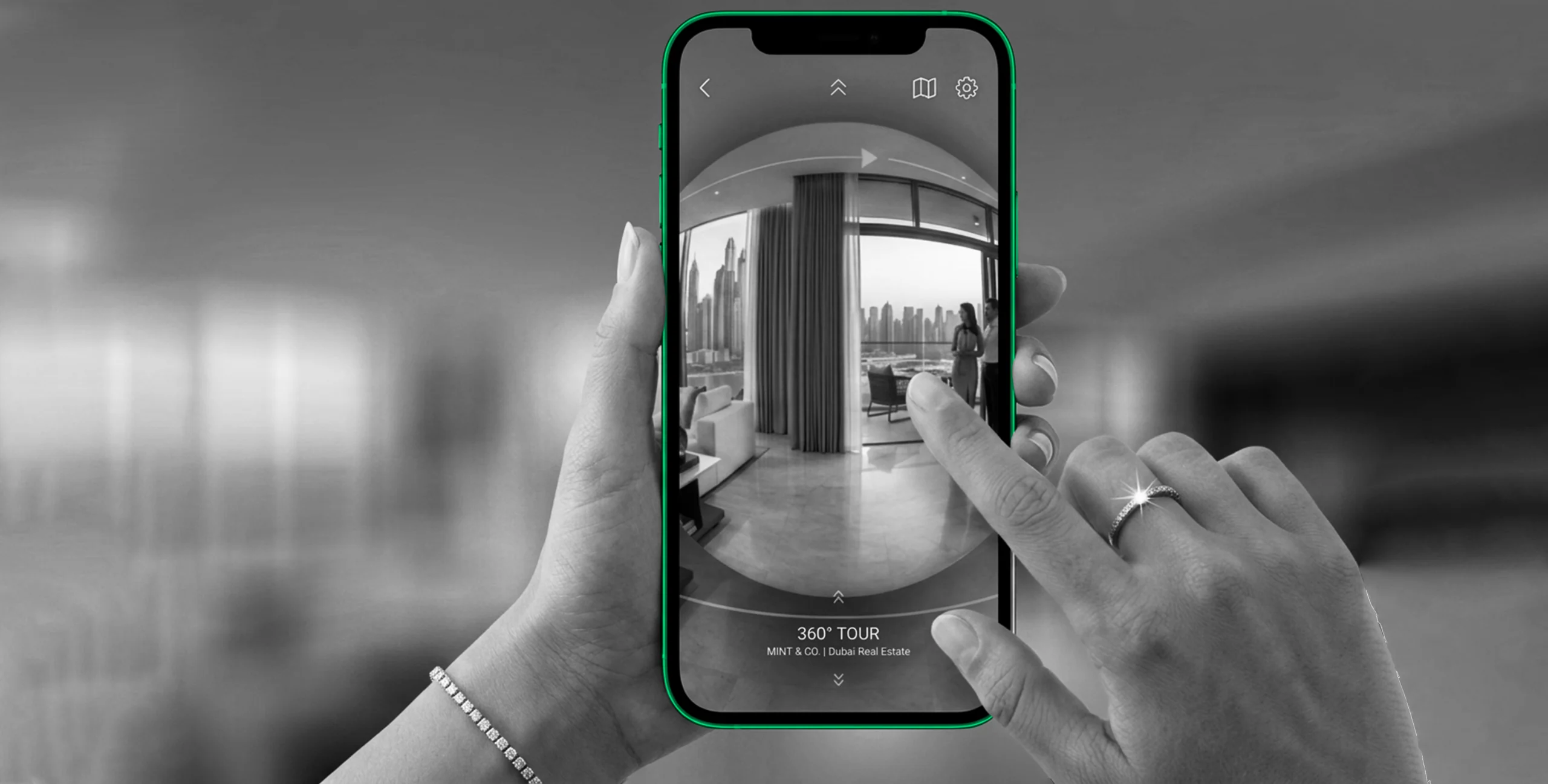
360 real estate photography gives buyers a more complete view of a property by allowing them to explore an entire space rather than looking at a few selected images. Using a 360-degree camera, photographers capture every angle of a room and connect multiple panoramic images to create an interactive real estate photography 360 virtual tour.
Unlike traditional photos that show a few selected angles, virtual tours let buyers look around on their own. It helps them understand the layout and get a better feel for the property before visiting.
For many buyers, especially those viewing properties remotely, that extra context can really make a big difference.
A 360 virtual tour typically helps buyers:
- Explore a property room by room.
- Understand layouts more clearly.
- View spaces from every angle.
- Spend more time engaging with listings.
- Make more informed viewing decisions.
As online property searches continue to grow, immersive experiences like virtual tours have become an increasingly important part of modern real estate marketing.
Why 360 Photography Is Transforming Real Estate Marketing
Buyers today expect more than photos when evaluating a property online. 360 virtual tours provide a more immersive experience, helping people understand a space better while giving developers and brokers a stronger way to showcase properties.
Creates an Immersive Property Experience
Most people don't buy property based solely on specifications. They buy based on feeling.
A brochure might tell you a property is 2,500 square feet. A floor plan might explain the layout. But neither fully communicates what it feels like to move through the space.
That's where virtual tours often work better.
Buyers can explore naturally. They can pause. Go back. Examine details that matter to them.
And surprisingly, those small moments can have a significant impact on buyer confidence.
Generates Higher Engagement
This is something many marketing teams notice fairly quickly.
Interactive content tends to keep people engaged longer.
Instead of viewing five photos and leaving, visitors often spend several minutes exploring a virtual tour. Sometimes longer.
That additional engagement can improve the overall effectiveness of property marketing campaigns.
Improves Lead Quality
For a lot of developers and brokers, this is one of the biggest benefits.
Virtual tours don't always generate more enquiries.
What they often generate are better enquiries.
People who have already explored a property in detail usually understand what they're interested in before they make contact. That often leads to more productive conversations and fewer wasted viewings.
Supports International Buyers
This is especially important in markets like Dubai.
Many buyers are researching properties from London, Mumbai, Singapore, Riyadh, or other international locations.
They can't simply visit every development they're considering.
A real estate photography 360 virtual tour helps bridge that gap and allows buyers to evaluate opportunities remotely.
Enhances Property Marketing ROI
Physical viewings take time.
Sales teams know this well.
The more information buyers can access before scheduling a visit, the more efficient the sales process tends to become.
Over time, this can improve both marketing efficiency and sales productivity.
Essential 360 Photography Equipment for Real Estate
Good results begin with the right equipment.
And honestly, not all cameras produce the same outcome.
Best 360 Cameras for Real Estate Photography
| Camera | Best For | Key Strength |
|---|---|---|
| Insta360 X5 / X4 | Residential listings, broker tours | High image quality with an easy shooting workflow |
| Ricoh Theta X | Quick property tours, small-to-medium listings | Simple operation and fast tour creation |
| Matterport Pro3 | Luxury residences, commercial properties, large developments | Professional-grade image quality and 3D scanning capabilities |
| GoPro Max | Flexible indoor and outdoor property shoots | Versatile capture modes and durable design |
Swipe sideways to see the whole table →
When evaluating 360 photography equipment real estate professionals use, image quality should always take priority over convenience.
Tripods and Stabilization Equipment
This sounds simple.
But it matters.
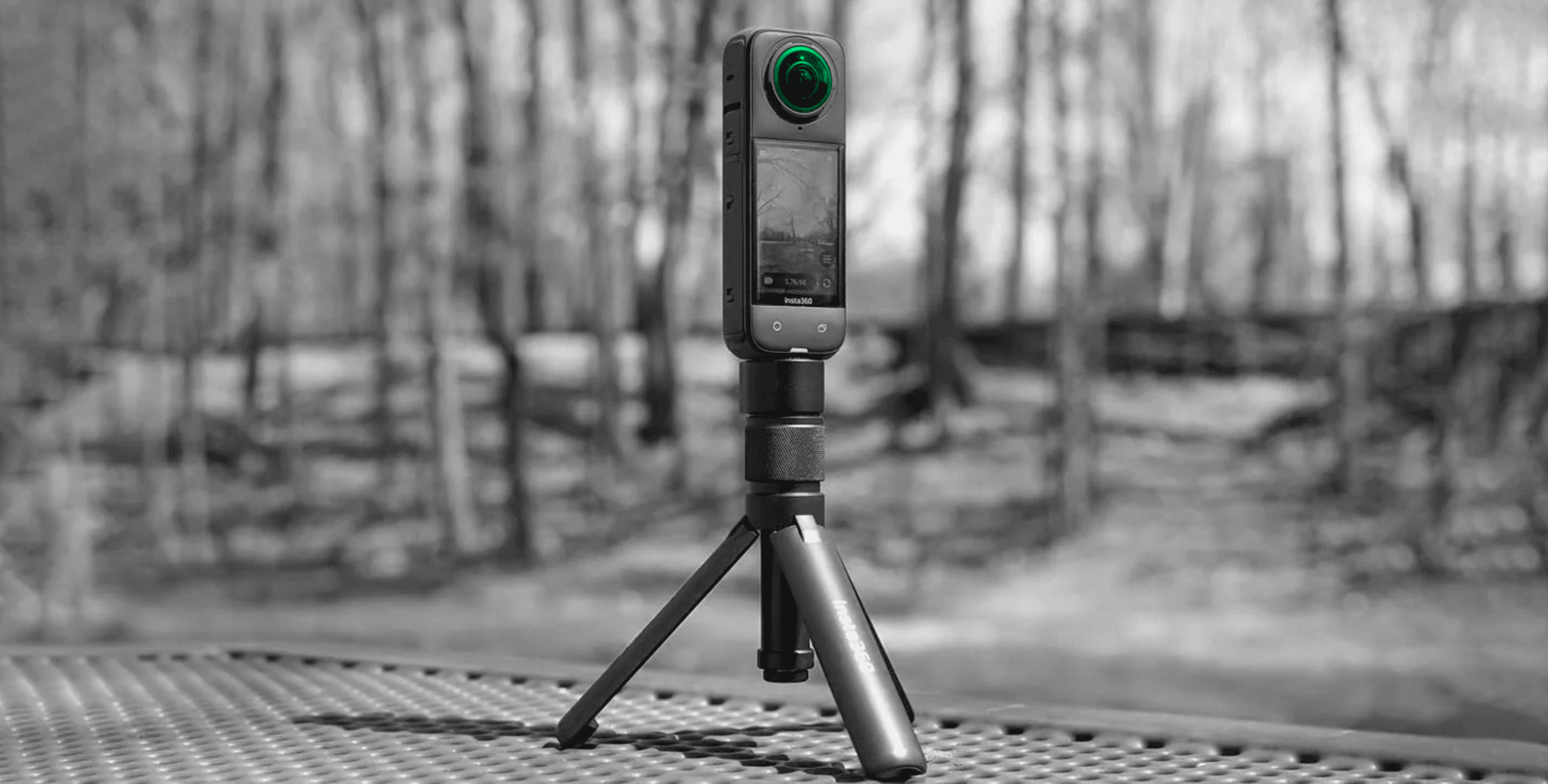
Even minor movement can create stitching issues and inconsistencies throughout the tour. Professional tripods really help maintain accuracy and consistency from room to room.
Lighting Equipment
Natural daylight usually delivers the best results.
That said, some spaces need additional support.
Bathrooms, hallways, walk-in wardrobes and enclosed rooms often benefit from supplemental lighting to maintain image quality
Lighting Equipment
Natural daylight usually delivers the best results.
That said, some spaces need additional support.
Bathrooms, hallways, walk-in wardrobes and enclosed rooms often benefit from supplemental lighting to maintain image quality
Editing & Tour Creation Software
Most virtual tours are created using platforms such as:
- Matterport.
- Kuula.
- 3DVista.
- CloudPano.
These platforms help transform individual images into fully interactive experiences.
How to Capture 360 Photography for Real Estate
Step 1 – Prepare the Property
This is probably the most overlooked step.
Yet it's often the most important.
Before any camera is set up:
- Remove clutter
- Clean all rooms
- Stage furniture properly
- Open curtains
- Check lighting
Many people underestimate how much preparation influences the final result.
Step 2 – Plan Your Shooting Route
Think like a buyer.
Where would someone naturally walk first?
The sequence should feel intuitive. Smooth. Logical.
A confusing tour experience can quickly reduce engagement.
Step 3 – Position the Camera Correctly
Most photographers position the camera at approximately eye level.
Consistency matters.
When camera heights vary significantly between rooms, viewers often notice the difference immediately.
Step 4 – Capture Every Important Space.
Focus on areas buyers care about most:
- Living rooms
- Dining spaces
- Bedrooms
- Kitchens
- Bathrooms
- Balconies
- Amenities
- Pool areas
- Clubhouses
Step 5 – Review and Retake if Necessary
Before leaving the property, review every capture.
How to Edit and Stitch 360 Real Estate Photos
Capturing images is only half the process.
Editing is where everything comes together.
Most workflows include:
Image Stitching
Combining multiple captures into seamless panoramic scenes.
Color Correction
Ensuring rooms feel consistent throughout the tour.
HDR Enhancement
Balancing bright windows and darker interiors.
Object Removal
Removing reflections, equipment, or distractions.
Branding Customization
Adding logos, floor plans, contact details, and interactive features.
How to Publish a Real Estate Photography 360 Virtual Tour
Creating the tour is important.
Getting people to see it is equally important.
Uploading to Virtual Tour Platforms
Platforms such as Matterport and Kuula host tours and simplify sharing.
Embedding on Property Websites
Embedding tours directly within property pages often improves engagement and user experience.
Integrating with Property Listings
Many listing portals now support virtual tour functionality.
Integrating with Property Listings
Many listing portals now support virtual tour functionality.
Sharing Through Social Media & Ads
Interactive content tends to perform particularly well in digital campaigns.
Using Tours for Lead Generation Campaigns
Tours can be paired with:
- Lead forms
- Downloadable brochures
- Consultation requests
- Investor campaigns
Top 7 Best Practices for Professional 360 Real Estate Photography
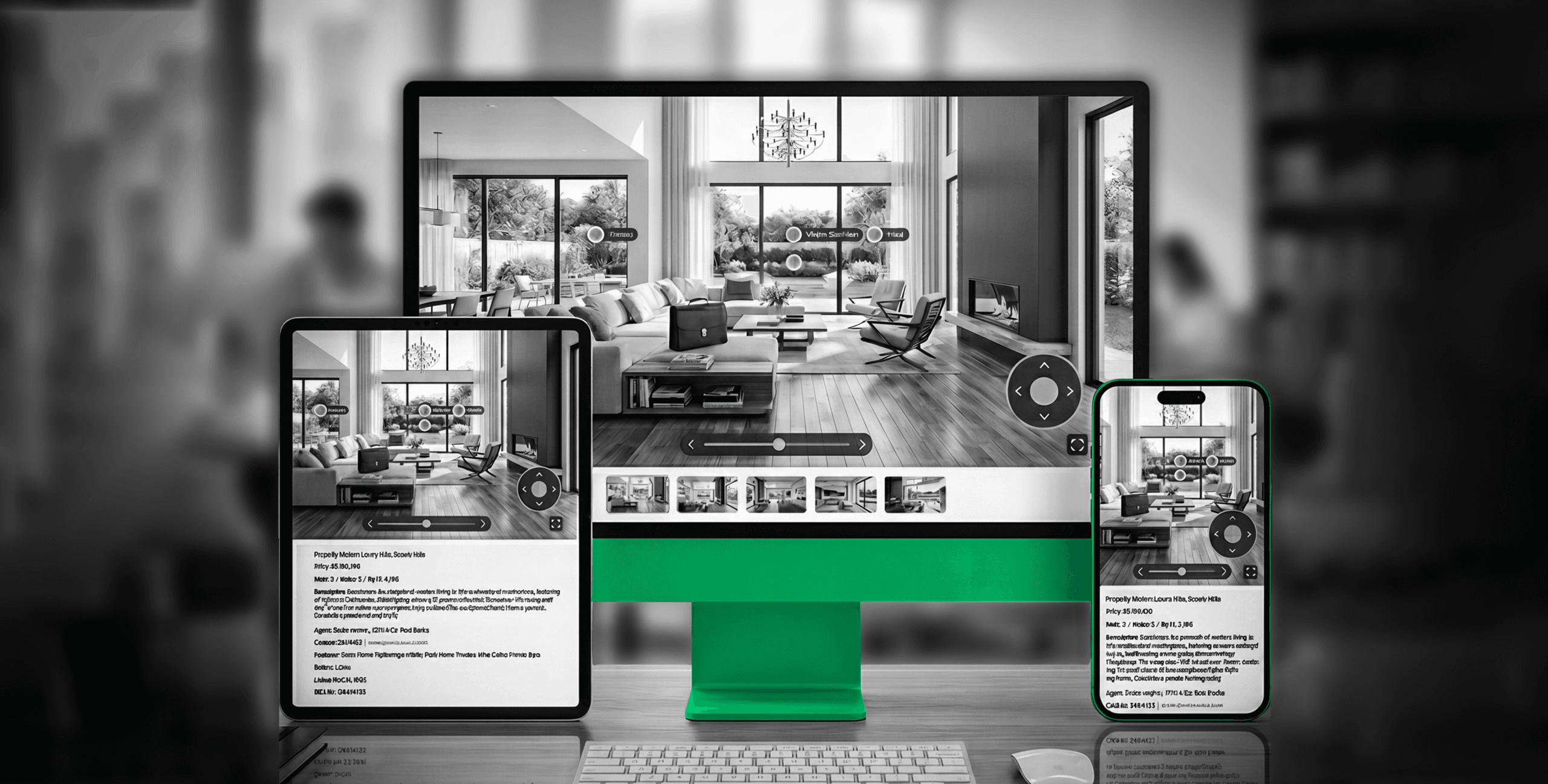
Following a few proven practices can really help create a smoother and more engaging viewing experience.
- Shoot during optimal daylight conditions.
- Maintain consistent camera height.
- Stage every room professionally.
- Use HDR imaging when needed.
- Optimize navigation flow.
- Highlight premium features.
- Review every scene before publishing.
Simple practices.
But they make a difference.
When Should You Hire a 360 Real Estate Photography Service?
Not every listing requires professional support.
But some projects absolutely benefit from it.
A professional 360 real estate photography service is particularly valuable for:
- Luxury properties.
- Branded residences.
- New developments.
- Off-plan projects.
- International investor campaigns.
- Premium listings.
In most cases, the higher the property value, the more important the presentation becomes.
Professional 360 real estate photography service providers can really enhance buyer engagement, especially when visual experience directly impacts conversion rates.
How Mint & Co. Elevates Virtual Property Marketing
Across the UAE, developers are increasingly combining property virtual tours with broader real estate CGI services.
The reason is fairly simple.
Buyers expect richer digital experiences.
A virtual tour may showcase a completed space, while CGI can visualize future phases, amenities, interiors and off-plan environments.
Mint & Co. is a marketing company that works within this growing ecosystem by combining:
- 360 virtual tours
- CGI integration
- Virtual staging
- Interactive property experiences
- Property visualization solutions
Together, these capabilities support more sophisticated real estate marketing solutions and help create stronger digital buyer journeys.
Explore immersive property marketing solutions
On a summarizing note
The role of 360 photography for real estate continues to expand as buyer expectations evolve.
People want more information. More transparency. More confidence before they engage with a property. And honestly, that’s unlikely to change.
When executed properly, virtual tours help buyers understand spaces more clearly, improve engagement, support international sales efforts, and often contribute to stronger lead quality.
For developers, brokers, and property brands, the opportunity isn’t simply creating better visuals. It’s creating better experiences.
Explore immersive property marketing solutions. See how CGI and virtual tours can increase buyer engagement.
Create digital property experiences that convert.
Got Questions? We've Got You.
How much does a 360 real estate photography service cost?
It depends on the property, project scope and level of production required. A luxury villa and a large-scale development campaign will naturally require different levels of investment. In most cases, pricing reflects both shooting complexity and post-production requirements.
What camera is best for real estate virtual tours?
The Insta360 X Series, Ricoh Theta Series, Matterport Pro Cameras, and GoPro Max remain among the most popular options. The right choice usually depends on image quality expectations and project requirements.
Can I create a 360 virtual tour with a smartphone?
Technically, yes. But honestly, there is often a noticeable difference between smartphone-generated tours and professionally captured virtual experiences. For premium properties, dedicated equipment usually produces stronger results.
How long does it take to create a virtual property tour?
Most residential projects can be completed within a few days. For premium properties, larger developments, and investor-focused campaigns, a bit more time is usually needed to create a seamless final tour.
Does 360 photography improve real estate lead generation?
In many cases, yes.
The reason is fairly straightforward. Buyers who complete a virtual tour often have a stronger understanding of the property before they enquire. That tends to improve lead quality and sales efficiency.
What software is used to create virtual tours?
Matterport, Kuula, 3DVista and CloudPano are among the most widely used platforms for creating and hosting virtual tours.
Is 360 photography better than traditional property photography?
Not necessarily.
The two formats serve different purposes. Traditional photography highlights key features while virtual tours provide spatial context. More often than not, the strongest campaigns use both together.
How do developers use 360 virtual tours for off-plan projects?
Developers often combine virtual tours with real estate CGI services, virtual staging, and interactive property visualization tools. It enables buyers to get a view of upcoming projects prior to completion of construction.
Can 360 tours be integrated into real estate websites?
Absolutely.
Most virtual tour platforms will allow you to embed tours in your property website, landing page, sales portal, and even your real estate marketing solutions campaign.
Tags: Get Leads, leads, Real Estate
Related articles

Real Estate Development PR: How Developers Launch Projects
Blogs, Real Estate

Real Estate Developer Marketing: The Complete Guide
Blogs, Real Estate
How to Build a Real Estate Development Marketing Plan
Blogs, Real Estate
10 Real Estate Development Marketing Strategies (2026)
Blogs, Real Estate
RERA Advertising Rules 2026: Developer Compliance
Blogs, Real Estate
Trakheesi Permit: Clear It Before Your Dubai Campaign
Blogs, Real Estate